What is a superbill — a therapist's guide to insurance reimbursement
TL;DR
- A superbill is an itemized receipt you give an out-of-network client so they can request reimbursement directly from their insurance company.
- It needs specific fields: your provider information, the client's information, diagnosis and procedure codes, dates of service, and fees.
- The client, not you, submits the superbill to their insurer, usually attached to a standard claim form.
- Missing or mismatched codes are the most common reason a client's reimbursement gets delayed.
If you don't accept a client's insurance directly, a superbill is how they get any money back for the sessions they paid you out of pocket. Getting the fields right is what determines whether their insurer pays quickly or sends the claim back.
What is a superbill?
A superbill is an itemized receipt that an out-of-network provider gives a client after a paid session, which the client can submit to their insurance company to request reimbursement. It's not a bill you send to an insurer directly. It's a document you hand to your client so they can bill their own insurer.
Superbills exist because many clients have out-of-network benefits even when a provider doesn't accept insurance directly. The superbill is the paperwork that makes those benefits usable. If you're still deciding whether to accept insurance at all, our free insurance vs. private pay calculator compares both on your actual take-home.
What information does a superbill need to include?
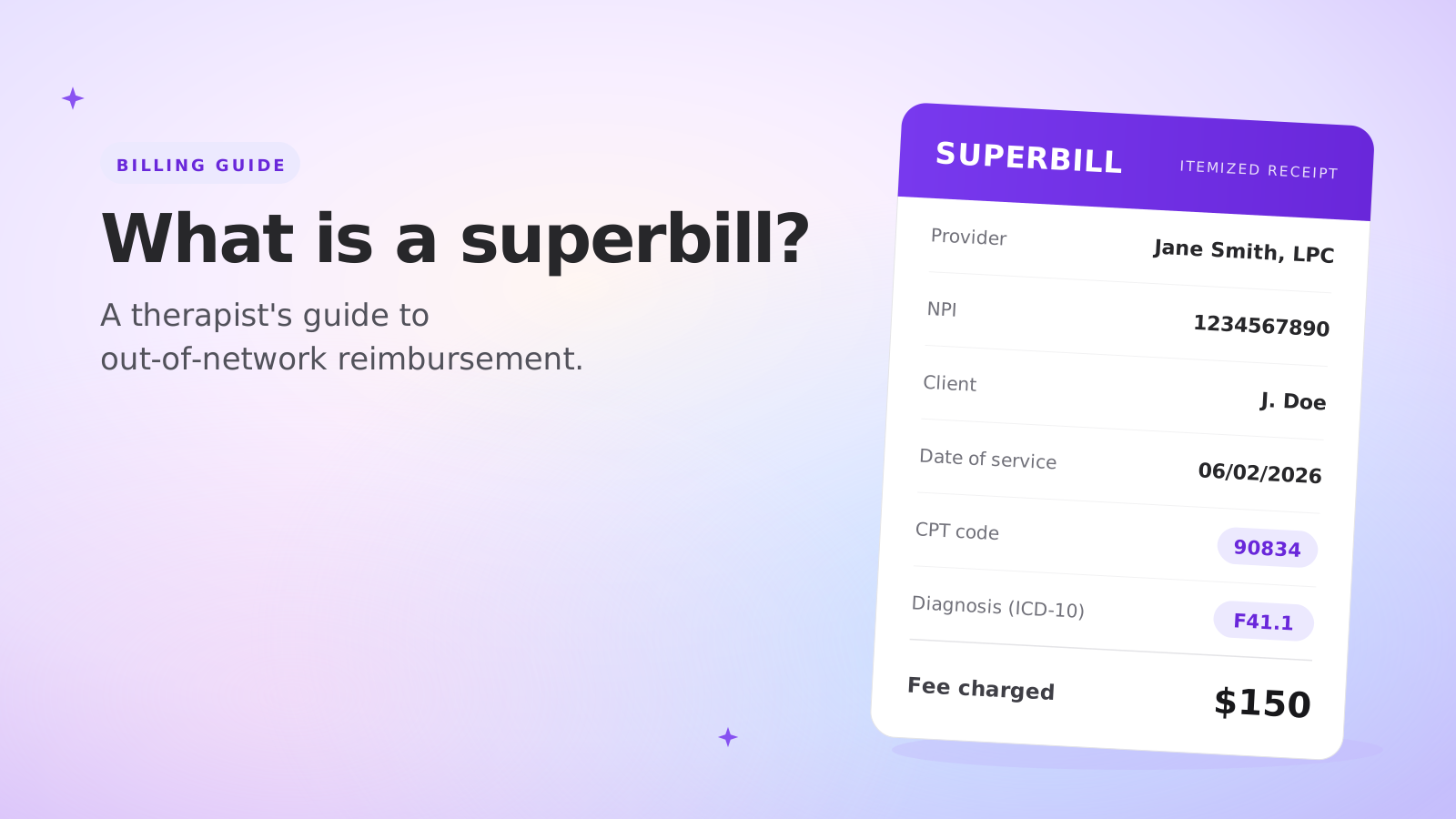
A superbill needs enough detail for an insurer to process a reimbursement claim without contacting you directly. At minimum, include:
- Your name, credentials, and National Provider Identifier (NPI)
- Your practice address and tax ID or Social Security number, depending on how you're set up
- The client's name and date of birth
- The diagnosis code (ICD-10) for the condition treated
- The CPT code for each service provided (for example, 90834 for a 45-minute individual session)
- The date of each session
- The fee charged for each session
- Your license number and license type
Sample superbill
The table below is an illustrative example only. It's not a real client record and shouldn't be used as a template without adapting it to your own practice details and your state's requirements.
.svg)
How do you create and give a client a superbill?
- Confirm the client wants one. Not every out-of-network client has out-of-network benefits worth using, so ask before you build a habit of generating them automatically.
- Pull the session details you need. Date, CPT code, diagnosis code, and fee, straight from your own records.
- Fill in your provider details once, then reuse the same information for every superbill. Your NPI, license number, and practice address don't change session to session.
- Give the client the superbill promptly, ideally at the time of payment or within a few days, so they're not waiting on paperwork to file a claim.
- Keep a copy for your own records in case a client or their insurer has a question later.
Or try Upheal. Upheal easily creates superbills for you, and makes tracking payments simple.
See an Upheal generated superbill
If billing paperwork like this is what's eating into your week, see how Upheal supports individual providers with the billing and documentation pieces built in, including client payments.
How does a client use a superbill for reimbursement?
A client submits the superbill to their insurance company, usually attached to a standard claim form, to request reimbursement for an out-of-network service. The CMS-1500 claim form is the standard form most insurers accept, and many clients attach their superbill directly to it or use the superbill's information to fill it out.
How much comes back to the client depends entirely on their specific plan's out-of-network benefits, not on anything you control as the provider.
Common superbill mistakes that delay reimbursement
.svg)
- Missing or incorrect NPI or license number. Insurers reject superbills they can't match to a verified provider.
- Vague or missing diagnosis codes. A superbill without a specific ICD-10 code is one of the fastest ways insurers bounce a claim back.
- Inconsistent fees across sessions with no explanation. If your rate changed mid-treatment, note it, don't just list mismatched numbers.
- Handing it over too late. Some plans have filing deadlines, and a client who receives their superbill weeks after the session may miss the window.
Frequently Asked Questions
What is a superbill used for?
A superbill is used by out-of-network clients to request reimbursement from their own insurance company for sessions they paid for out of pocket.
It functions as an itemized receipt with the specific codes and provider details an insurer needs to process a claim.
Is a superbill the same as an invoice?
No, a superbill isn't the same as an invoice, even though both show what a client paid.
.svg)
An invoice simply requests or confirms payment. A superbill includes clinical billing codes, provider credentials, and licensing information specifically so an insurance company can process a reimbursement claim.
Does a superbill guarantee reimbursement?
No, a superbill does not guarantee reimbursement.
Whether a client gets money back, and how much, depends entirely on their specific insurance plan's out-of-network benefits. A superbill simply gives them what they need to find out and file a claim.
Can therapists use Upheal to help with superbills?
Upheal keeps the session details a superbill needs, like CPT codes, dates, and diagnosis codes, organized in one place so you're not hunting for them after the fact.
That doesn't replace your own practice's billing setup, but it removes the step of digging back through separate notes and calendars to build one.
The bottom line
A superbill is simple in concept and easy to get wrong in the details. Keep your provider information consistent, use accurate codes for every session, and hand it over promptly, and most reimbursement delays disappear on their own.
Start free at Upheal → and keep the details a superbill needs organized from the first session.