Best teletherapy platforms for therapists [2026]

Between dropped video calls, insurance billing nightmares, and privacy concerns about AI training on client conversations, choosing the right platform feels like navigating a minefield.
After analyzing extensive practitioner feedback and platform capabilities, these are the best teletherapy platforms for therapists right now, the five that consistently demonstrate the depth needed for professional practice:
But here's what matters: these aren't just video conferencing tools with therapy labels slapped on. Each represents a fundamentally different philosophy about how technology should support clinical work.
TL;DR
- Five platforms make the cut for mental health teletherapy in 2026: Upheal, TherapyNotes, SimplePractice, Ensora Telehealth, and Doxy.me.
- Upheal is new to this list: an AI-native EHR with telehealth built in. Calls are free on the free plan, and telehealth with AI notes starts at $39 a month.
- TherapyNotes and Ensora Telehealth remain the most consistently rated for video call stability.
- SimplePractice retains de-identified Note Taker transcripts by default for clinicians who enabled Note Taker on or after June 17, 2026, with opt-out available.
- There's no single best platform. The right one depends on whether you prioritize documentation, customization, specialization, simplicity, or built-in AI notes.
What to look for in a teletherapy platform
💰 Cost structures beyond the monthly fee
Platform pricing tells a story about who they're built for.
Some platforms charge per active client, seemingly reasonable until your thriving practice hits 40 clients and costs explode. Others offer flat rates that include features you'll never touch.
The most sustainable platforms align their pricing with practice growth, scaling costs predictably as revenue increases.
Consider this: a therapist seeing 25 clients weekly at $0.49 per session (Blueprint's model) faces over $600 annually in session fees alone.
Meanwhile, platforms offering unlimited sessions for fixed monthly rates provide cost certainty that enables financial planning.
💔 Core telehealth performance that preserves presence
A frozen screen during a breakthrough moment doesn't just disrupt technology — it ruptures therapeutic presence.
Platform reliability extends beyond technical specifications. It's about maintaining the subtle nonverbal cues that inform clinical intuition.
When clients shift uncomfortably or tears well up, you need crystal-clear video that captures these crucial moments.
The best platforms deliver consistent quality even when internet connections waver.
🔒 Privacy beyond HIPAA checkboxes
HIPAA compliance is baseline, not exceptional.
The real privacy conversation starts with how platforms handle your session data after the call ends.
Some platforms default to using de-identified transcripts for AI training. Your client's words might shape another therapist's AI assistant, and that's worth knowing before you sign up, not after.
Others require explicit opt-in consent before any data touches machine learning systems.
This distinction matters profoundly. As venture-funded companies actively purchase therapeutic conversations to train chatbot replacements, your platform choice directly impacts the profession's future autonomy.
📑 Practice management that reclaims evenings
Administrative burden is therapy's hidden tax.
Effective platforms transform repetitive tasks into automated workflows.
Automated appointment reminders that reduce no-shows by 30%. Insurance verification that catches eligibility issues before sessions. Client portals that collect intake forms while you sleep.
These aren't conveniences. They're the difference between sustainable practice and burnout.
🧠 Clinical tools that respect your approach
Documentation should amplify your clinical voice, not standardize it.
Whether you practice EMDR, psychodynamic therapy, or integrate multiple modalities, your platform should adapt to your methodology.
Advanced features like AI-assisted progress notes can transform 30-minute documentation sessions into 5-minute reviews, but only if they understand therapeutic language and preserve your unique clinical perspective.
Platform comparison at-a-glance
| Platform | Monthly cost | Reliability | Privacy | Practice management | Clinical tools |
|---|---|---|---|---|---|
| Upheal | 💲 Free plan includes telehealth calls (no AI); with AI notes $39/mo, or the full EHR at $1/session or $99/mo, no separate telehealth fee | ⭐⭐⭐⭐ Native, built into the web app | ⭐⭐⭐⭐⭐ HIPAA-compliant, BAA for every account; video and notes live in the same secure workspace | ⭐⭐⭐⭐⭐ Full EHR: scheduling, charting, insurance billing, all in one place | ⭐⭐⭐⭐⭐ AI notes, Golden Thread treatment plans, session insights, client chart accessible mid-call |
| TherapyNotes | 💲💲💲 $69/mo solo, $79+$50/additional clinician for groups (+$15/clinician for premium telehealth) | ⭐⭐⭐⭐⭐ | ⭐⭐⭐⭐⭐ Full encryption + BAA | ⭐⭐⭐⭐⭐ Complete integration | ⭐⭐⭐⭐⭐ AI-assisted (TherapyFuel Scribe, +$40/mo/provider), specialized templates |
| SimplePractice | 💲💲 $49-99/mo by tier (AI Note Taker +$35/mo/clinician) | ⭐⭐⭐ | ⚠️ Retains de-identified Note Taker transcripts by default for clinicians who enabled it on or after June 17, 2026 (opt-out available) | ⭐⭐⭐⭐⭐ Unified workflow | ⭐⭐⭐⭐ Fairly customizable |
| Ensora Telehealth | 💲💲 $29-89/mo per therapist by tier (telehealth included on Advanced and Premier, +$12/mo on Essentials) | ⭐⭐⭐⭐ | ⭐⭐⭐⭐⭐ Security-first design | ⭐⭐⭐⭐⭐ Comprehensive suite | ⭐⭐⭐⭐⭐ Flexible, limited templates |
| Doxy.me | 💲 Free tier available; Premium $29/user/mo billed annually | ⭐⭐⭐⭐ | ⭐⭐⭐⭐⭐ No recording of calls | ⭐⭐ Telehealth only | ⭐ None included |
1. TherapyNotes
TherapyNotes exemplifies what happens when developers actually understand clinical workflow.
⭐ Where TherapyNotes excels
The platform's standout feature isn't flashy — it's fundamental: video quality that doesn't fail when you need it most. While competitors struggle with connectivity, practitioners consistently report clear, stable sessions that preserve therapeutic presence.
This reliability extends throughout the platform. Purpose-built note templates understand therapeutic language. AI-assisted documentation recognizes clinical terminology.
The ePrescribe feature — rare among therapy-focused platforms — integrates seamlessly with the documentation workflow.
Every element reflects deep understanding of mental health practice. The platform doesn't just digitize paper processes; it reimagines them for digital efficiency while preserving clinical integrity.
⚠️ TherapyNotes' limitations
Customization flexibility remains surprisingly restricted.
Practitioners report frustration with fixed appointment reminder timing and inability to schedule availability changes in advance. The absence of direct client messaging forces communication through external channels — adding unnecessary complexity to routine interactions.
The learning curve also deserves consideration. While ultimately powerful, new users often require weeks to fully leverage the platform's capabilities.
👉 Ideal for: Practices prioritizing documentation excellence and telehealth reliability over maximum flexibility.
2. SimplePractice
SimplePractice attracts therapists who refuse to compromise their unique clinical approach for software convenience.
⭐ SimplePractice's strengths
The platform's customization depth is remarkable.
From intake forms to progress notes, virtually every element bends to your preferences. This isn't surface-level theming — it's fundamental adaptability that respects diverse therapeutic approaches.
The all-in-one integration eliminates tool-juggling. Paperless intake feeds treatment planning.
Automated billing processes payments overnight. The secure portal manages everything from scheduling to document sharing.
When it works, it's elegant.
⚠️ The connectivity challenge
Here's where elegance stumbles: telehealth reliability.
Multiple practitioners describe "frequent disconnections" that shatter therapeutic momentum. For a platform positioning itself as comprehensive, this core instability creates significant friction.
Some practices work around it with external video platforms — defeating the all-in-one promise.
SimplePractice began retaining de-identified, de-coupled Note Taker transcripts on June 17, 2026. Clinicians who enable Note Taker on or after that date are opted in by default; earlier users are opted out. Clinicians can opt out at the clinician, client, or session level. SimplePractice states it uses retained transcripts to improve Note Taker and related AI features, and that it is not training an AI model with them. For the full breakdown, see what SimplePractice's Note Taker does with your session transcripts.
👉 Ideal for: Practices valuing customization above all, with backup plans for connectivity issues.
3. Ensora Telehealth (formerly TheraNest)
The transformation from TheraNest to Ensora Health signals more than rebranding — it's a fundamental expansion of capability.

⭐ Ensora's evolved strengths
The platform now integrates seamlessly with Ensora Health's broader ecosystem, providing specialized tools for CCBHC compliance, group therapy management, and substance use recovery documentation that other platforms overlook.
Customization runs deep. Create custom forms, workflows, and templates matching your exact needs. The color-coded calendar with intuitive rescheduling reduces administrative friction. Real-time insurance eligibility verification eliminates billing surprises before they happen.
Particularly valuable: automated reminders that practitioners report reduce no-shows by up to 30%. That's not convenience — it's revenue protection.
⚠️ Understanding Ensora's trade-offs
Advanced features demand investment — primarily time.
With only two pre-built note templates, practitioners must create their documentation structure from scratch.
Treatment plans and intake forms lack the flexibility found elsewhere in the platform. The learning curve for advanced features typically spans several weeks.
Pricing is now per therapist: $29, $59 or $89 a month by tier, with unlimited clients, replacing the old caseload-based model. Telehealth is included on the two higher tiers and a $12 monthly add-on on Essentials.
👉 Ideal for: Practices serving specialized populations or pursuing CCBHC certification, willing to invest setup time for long-term customization benefits.
4. Doxy.me
Doxy.me operates on the concept that, sometimes, less is more.
⭐ The power of simplicity
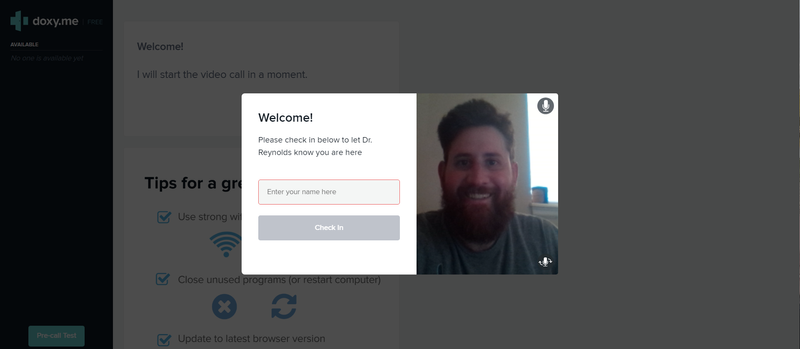
Zero barriers. No downloads. No account creation for clients.
Doxy.me operates entirely through web browsers, eliminating every possible friction point between clients and care.
The free HIPAA-compliant version includes a Business Associate Agreement — providing solo practitioners enterprise-level security without enterprise-level costs.
This simplicity extends to device flexibility. Any device with a camera becomes your therapy office.
For practitioners with established practice management systems, Doxy.me provides the missing video component without forcing migration.
⚠️ When simple becomes limiting
Sometimes, less is more. But other times, less is just… less.
Without integrated scheduling, billing, or documentation, practitioners maintain separate systems for practice management.
This creates potential inefficiencies and data silos that comprehensive platforms avoid.
Performance depends entirely on internet quality. Users explicitly warn that weak connections result in poor call quality — a significant limitation for practitioners or clients in areas with unreliable infrastructure.
👉 Ideal for: Budget-conscious solo practitioners needing reliable video without practice management, or those supplementing existing EHRs.
5. Upheal
Upheal is an AI-native EHR with telehealth built in, so the call, the note and the bill live in one place.
⭐ Where Upheal excels
When the session ends, the AI note is drafted from the call, with scheduling, insurance billing and the client portal in the same workspace.
You can check your notes mid-call, and you and your client can blur the background or pick a virtual one. Transcription covers 35 languages.
Calls without AI notes are free. With AI notes, telehealth is $39 a month alongside your current EHR, or part of the full EHR at $1 per session.
⚠️ Upheal's trade-offs
Its video room has a shorter track record than TherapyNotes' or Doxy.me's, so there's less public feedback on call stability. There's no ePrescribe.
👉 Ideal for: Therapists who want telehealth, AI notes and billing in one EHR.
Best telehealth platform by practice
Best telehealth platform for solo therapists
Your priorities will point you toward the best telehealth platform for your practice:
- For documentation excellence and telehealth stability, TherapyNotes justifies its investment through reliability and purpose-built features.
- Does customization matter most to you? SimplePractice offers unmatched flexibility — just maintain backup video solutions.
- Building your practice? Start on a free plan, like Doxy.me's video-only tier or Upheal's free plan with telehealth calls, then upgrade as growth demands.
Best telehealth platform for group practices
Multiple providers multiply both opportunities and complications.
- TherapyNotes and SimplePractice both offer robust multi-user features, but TherapyNotes' superior stability might prove decisive when technical issues compound across providers.
- Ensora Telehealth becomes particularly compelling for specialized populations or CCBHC pursuit, where its targeted features provide unique value.
- Upheal suits group practices that want telehealth, AI notes and insurance billing in one EHR, with Biller and Practice Manager roles at no seat cost.
Integrating with other tools
Your platform doesn't operate in isolation.
Keeping your current EHR? AI notes can still close the documentation gap. Upheal's AI clinical notes run alongside any EHR and any video platform, turning each session into a note that captures therapeutic nuance.
For Doxy.me users, Upheal's Golden Thread feature weaves treatment continuity across sessions, solving documentation gaps without requiring platform migration.
This hybrid approach — combining specialized tools rather than accepting all-in-one compromises — increasingly defines sophisticated practice management.
Making your decision
Platform selection transcends feature comparison — it's about aligning technology with clinical values.
Each platform embodies different priorities. TherapyNotes prioritizes stability and clinical depth. SimplePractice maximizes customization. Ensora Telehealth serves specialized needs. Doxy.me champions simplicity. Upheal puts telehealth, AI notes and billing in one AI-native EHR.
Your evaluation framework:
- Financial sustainability: Immediate costs versus long-term scalability
- Clinical alignment: Whether documentation, customization, or simplicity drives your practice
- Technical requirements: Stability versus feature breadth trade-offs
- Privacy philosophy: Default data usage versus explicit consent models
Start with trials. Test with actual sessions, not demos. Pay attention to friction points — minor annoyances compound exponentially when repeated daily.
The big picture
This decision impacts more than efficiency — it shapes how therapy evolves in the digital age.
As AI companies actively purchase therapeutic conversations for training chatbot replacements, your platform choice becomes an ethical stance. Selecting partners who respect both time and privacy isn't just good practice — it's essential for preserving the profession's autonomy.
The right platform feels like an extension of your clinical work, not another system to manage. It should enhance your ability to be present with clients, not create new anxieties about technology or privacy.
Choose partners who understand that efficiency without ethics isn't progress.
In an era where technology views therapeutic conversations as training data, protecting the sacred space of therapy becomes our collective responsibility.
Frequently asked questions
What's the difference between teletherapy platforms and EHR software?
Teletherapy platforms handle the video call itself, while EHR (electronic health record) software handles documentation, scheduling, and billing. Some tools, like TherapyNotes and SimplePractice, bundle both. Others, like Doxy.me, are video-only and expect you to pair them with a separate practice management system.
Is Doxy.me actually free, or is that just a trial?
The free tier is a permanent plan, not a trial, and it includes basic one-on-one HIPAA-compliant video calls with a signed BAA. It excludes HD video, screen sharing, group calls, and intake forms, which sit behind the paid Premium plan.
Do teletherapy platforms use session data to train AI?
It depends on the platform and has been changing. SimplePractice retains de-identified Note Taker transcripts by default for clinicians who enabled Note Taker on or after June 17, 2026, and uses them to improve Note Taker and related AI features. Clinicians can opt out. Always check a platform's current data retention policy directly, since these terms shift over time.
Which teletherapy platform is most reliable for video calls?
TherapyNotes and Ensora Telehealth are the most consistently rated for connection stability. SimplePractice's flexibility comes with more reported connectivity complaints, which is why some practices pair it with a separate video tool.
Can I use a dedicated teletherapy platform alongside an AI notetaker like Upheal?
Yes. Upheal doesn't touch your video platform, it just needs the session audio to write the note. Switch your telehealth tool as often as you want; your notetaking stays put.