
Does ChatGPT recommend you? AI visibility for therapists
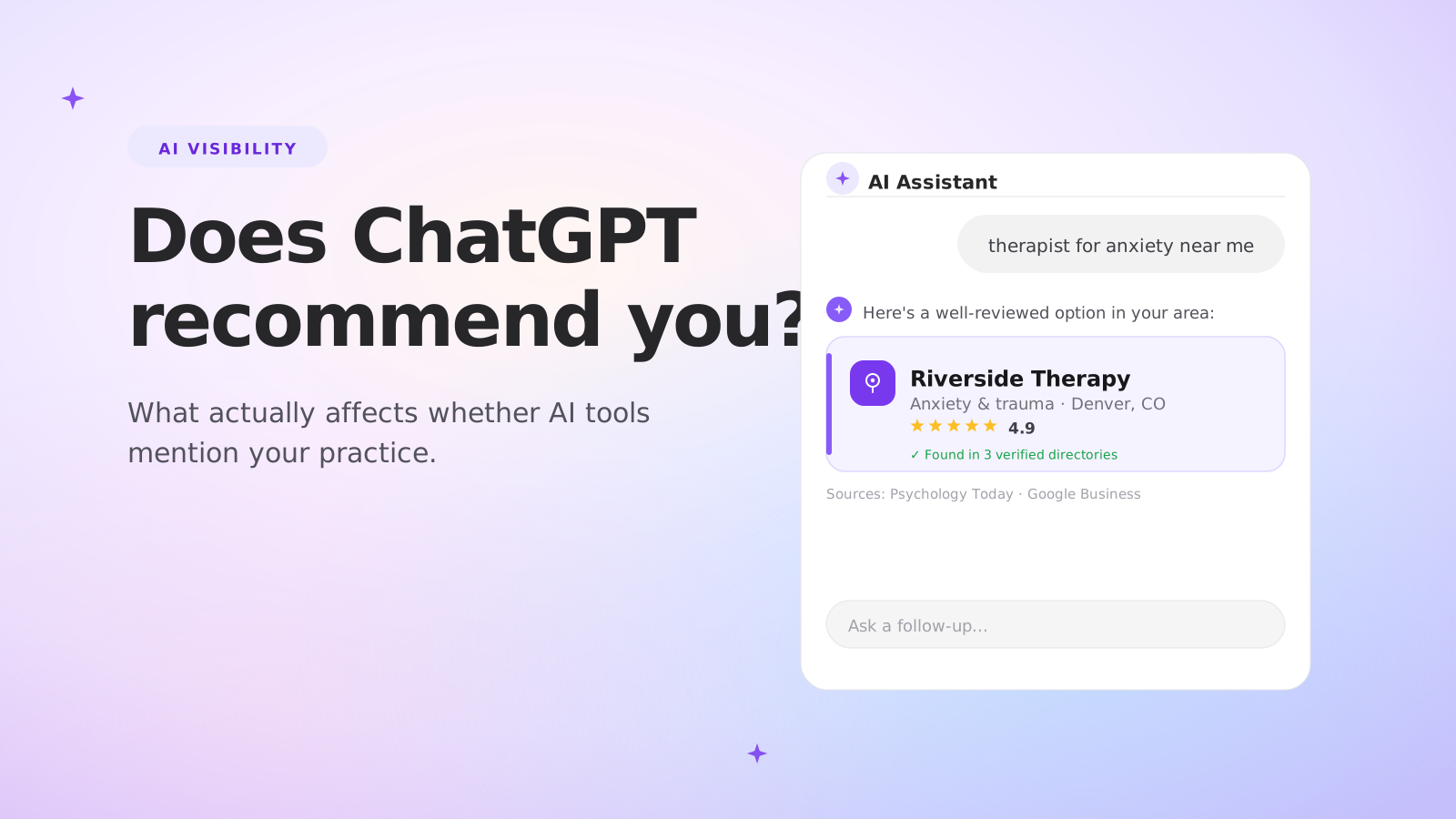
A growing number of prospective clients aren't starting their search for a therapist on Google. They're opening ChatGPT, Perplexity, or a Google AI Overview and asking a direct question: who's a good trauma therapist near me, or how do I find a therapist who takes my insurance. Whether your practice comes up in that answer is what AI visibility means.
AI visibility is how easily tools like ChatGPT, Perplexity, and Google AI Overviews can find, understand, and mention your practice when someone asks a relevant question. It's a newer, related idea to SEO, not a replacement for it: the same clarity and consistency that help Google rank you also help AI models describe you accurately.
TL;DR
- Clients are starting to ask AI tools for therapist recommendations, not just Google.
- AI tools pull from what's already well-structured and consistent online, not from a paid placement.
- A complete Psychology Today profile, a clear website, and consistent directory listings are what actually help today.
- You can't pay ChatGPT or Perplexity to recommend you. There is no AI ad platform for this yet.
- This is early and evolving. Treat any specific ranking claim, including this article's, with healthy skepticism.
Do people actually find therapists through ChatGPT?
Some do, and the number is growing, though it's still small next to traditional search. In conversations with prospective Upheal customers, a small number have mentioned discovering Upheal itself through an AI assistant rather than a Google search or referral, an early but real signal that this discovery path is starting to matter.
This isn't a trend to panic about or over-invest in yet. It's worth understanding early because the practices that show up clearly and consistently online now are the ones AI tools will keep citing as the behavior grows. Our piece on how social workers can use AI covers the broader shift in the field, of which this is one part. Nobody, including Upheal, can promise a specific ranking or guarantee an AI tool will recommend a given practice. What's realistic is improving the odds by being genuinely easy to find and describe accurately.
How does ChatGPT decide who to recommend?
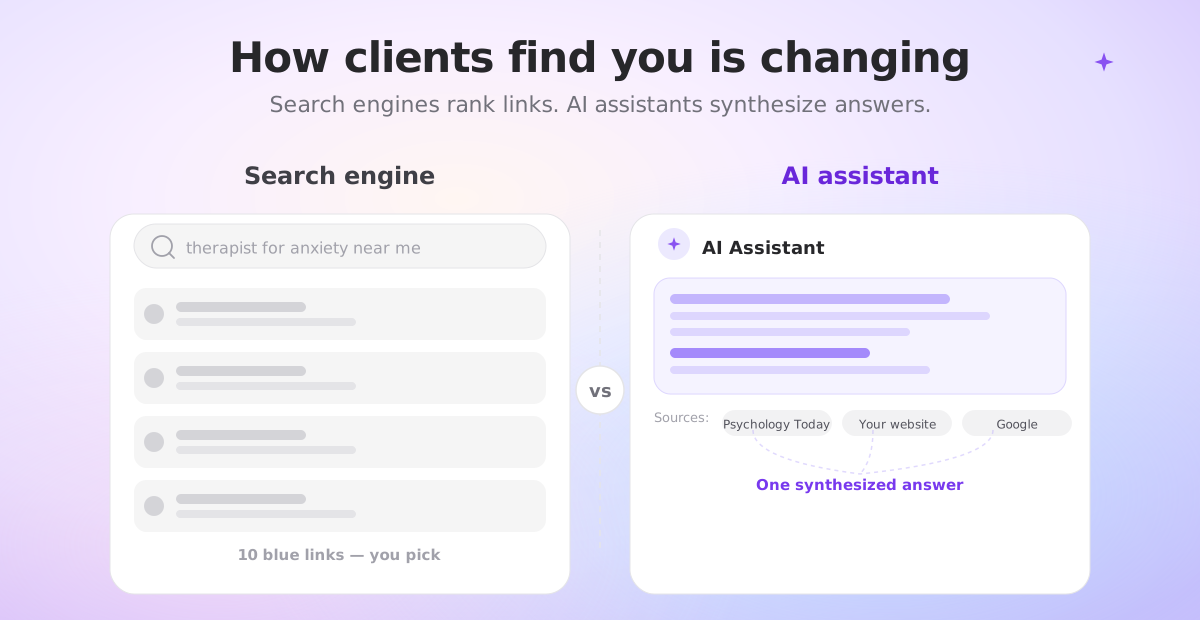
ChatGPT and similar tools don't decide who to recommend the way a search engine ranks pages. They generate an answer based on what they've read: your website, your directory profiles, and any other public source that describes your practice.
That means the inputs are familiar ones. A website that clearly states your specialty and city in plain language. A Psychology Today or GoodTherapy profile that's complete and current. Consistent information across every place you appear, so an AI model isn't working from two different addresses or two different lists of specialties for the same person.
There's no separate "AI SEO" system to game here. If you're already doing the fundamentals well, a clear, consistent, well-described online presence, you're the one most likely to get mentioned. If you haven't worked through the basics yet, our SEO checklist for therapists covers the same groundwork this builds on.
What actually affects your AI visibility today
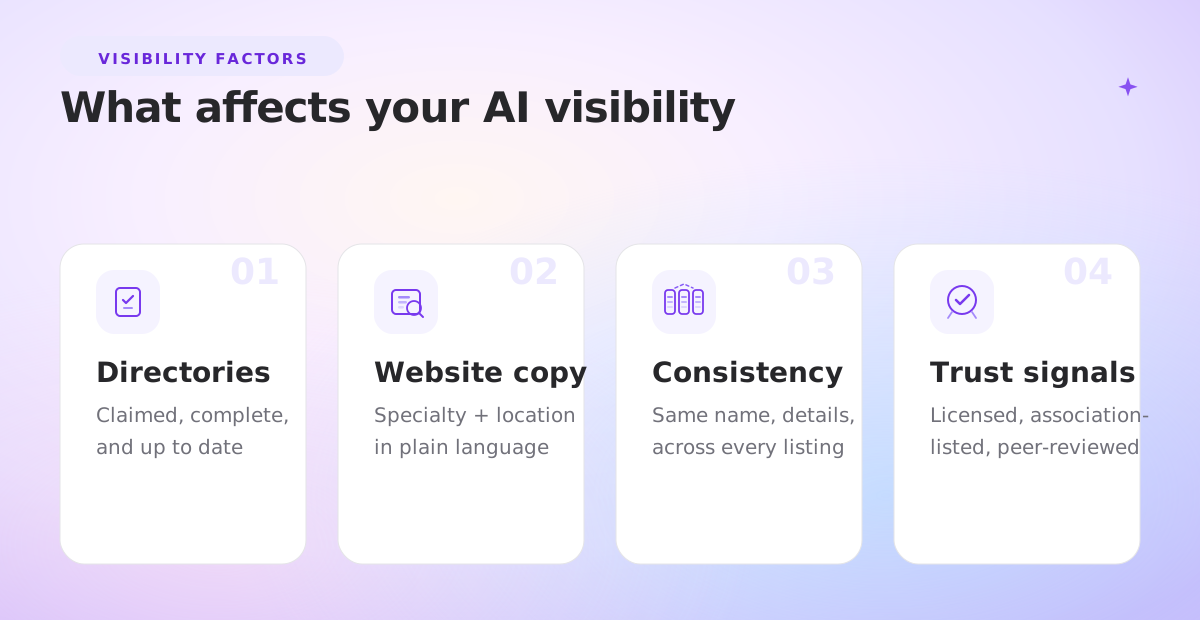
- A complete, consistent Psychology Today profile. This remains the highest-traffic therapist directory in most US markets, and it's a common source AI tools draw from when describing a local therapist.
- A website that states your specialty and location in plain language. Vague copy is hard for both search engines and AI models to summarize accurately. Say what you treat and where, clearly, more than once.
- Structured, consistent information everywhere you appear. Your name, credentials, specialty, and location should match across your website, directories, and any professional association listing. Inconsistency creates confusion for AI models the same way it confuses local search rankings.
- Being named in sources AI models already trust. Professional associations, established directories, and other sites with a track record of accuracy carry more weight than a single unlinked mention.
You know why your Psychology Today profile hasn't been touched since last year: it's the same reason last Tuesday's notes are still open in another tab. If notes are eating the time you'd spend on this, Upheal supports solo providers and group practices with AI-assisted notes built to give some of that time back.
Can you pay to be recommended by ChatGPT?
No, there is currently no advertising platform that lets you pay for a mention inside ChatGPT, Perplexity, or a Google AI Overview. This is a meaningful difference from traditional search, where paid ads sit clearly alongside organic results.
Because there's no paid shortcut, consistency and accuracy carry more weight here than anywhere else in your online presence. According to Google's guidance on AI features in Search, AI-generated results draw on the same crawled, indexed content that powers traditional search, which is why the fundamentals (a clear, accurate, well-structured site) still matter most.
FAQ
What is AI visibility for therapists?
AI visibility is how easily tools like ChatGPT, Perplexity, and Google AI Overviews can find and accurately describe your practice when someone asks a relevant question. It works alongside traditional SEO rather than replacing it.
Is AI visibility the same thing as SEO?
No, but they overlap heavily. Traditional SEO focuses on ranking in search results; AI visibility focuses on whether an AI model can find and accurately summarize your practice. The same clear, consistent, well-structured online presence supports both.
Can I check whether ChatGPT knows about my practice?
You can ask ChatGPT or Perplexity a question a prospective client might ask, like naming your specialty and city, and see whether your practice or your directory profiles come up. This is an informal check, not a guaranteed or repeatable measurement.
Should I change my whole marketing strategy because of AI search?
No. The fundamentals, a complete Google Business Profile, a consistent Psychology Today listing, and a clear website, are the same actions that help with traditional SEO and AI visibility alike. There's no separate strategy to chase yet.
The bigger picture
AI visibility is still early, and anyone who tells you they've cracked the exact formula is overstating what's actually known. What's true today is that if you're already doing the fundamentals well, a clear website, a complete Psychology Today profile, consistent information everywhere, you're the one best positioned as this channel grows.
If finding the time for any of this is the real obstacle, try Upheal free → and see what AI-assisted documentation gives back to your week.