
Private practice fees: how to price your therapy sessions
There's a blank field in your intake paperwork that says "session rate," and at some point you have to type a number into it. Most therapists set that number once, based on a rough guess or what a colleague mentioned, and then don't revisit it for years. That number affects your caseload, your burnout risk, and whether the practice is actually sustainable, so it's worth more than a guess.
TL;DR
- Your rate needs to cover session time plus the unpaid time around it: notes, coordination, no-shows, admin
- Insurance reimbursement is usually well below private-pay rates for the same session, know the gap before you commit to a payer mix
- Sliding scale works when it's structured with clear criteria and a cap on how many slots you offer; it backfires when it's unstructured and eats your whole caseload
- Rates should go up periodically, not just when you're desperate. An annual review is a reasonable default
- The most common pricing mistake isn't charging too little for a session, it's not accounting for the unpaid hours around it
What actually goes into a rate
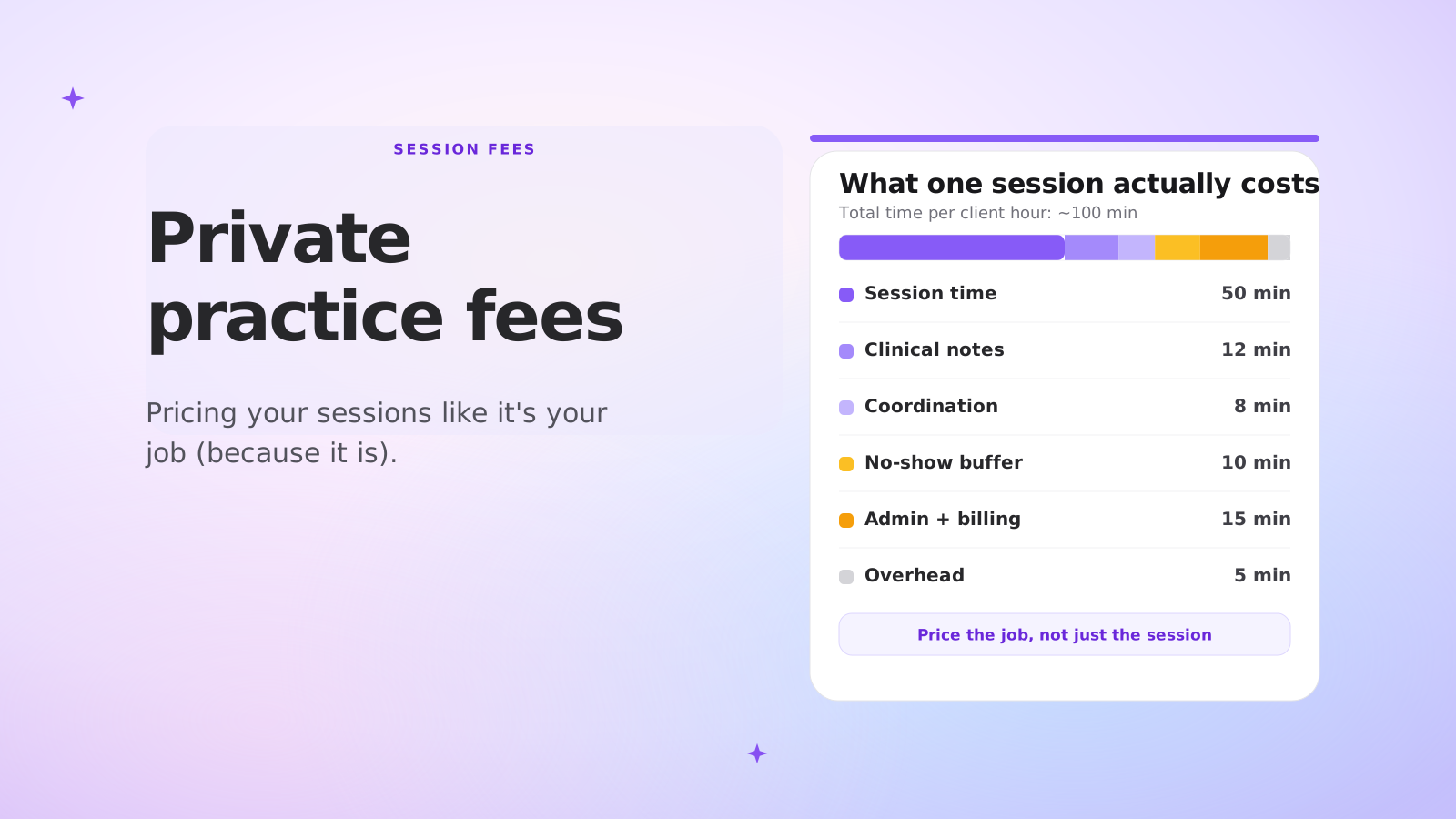
A session rate isn't just payment for 45 or 60 minutes in the room. It also has to cover the time you spend on notes, coordination with other providers, no-shows and late cancellations, and the general overhead of running a practice: software, insurance, continuing education. If you're only pricing the session itself, you're underpricing the job.
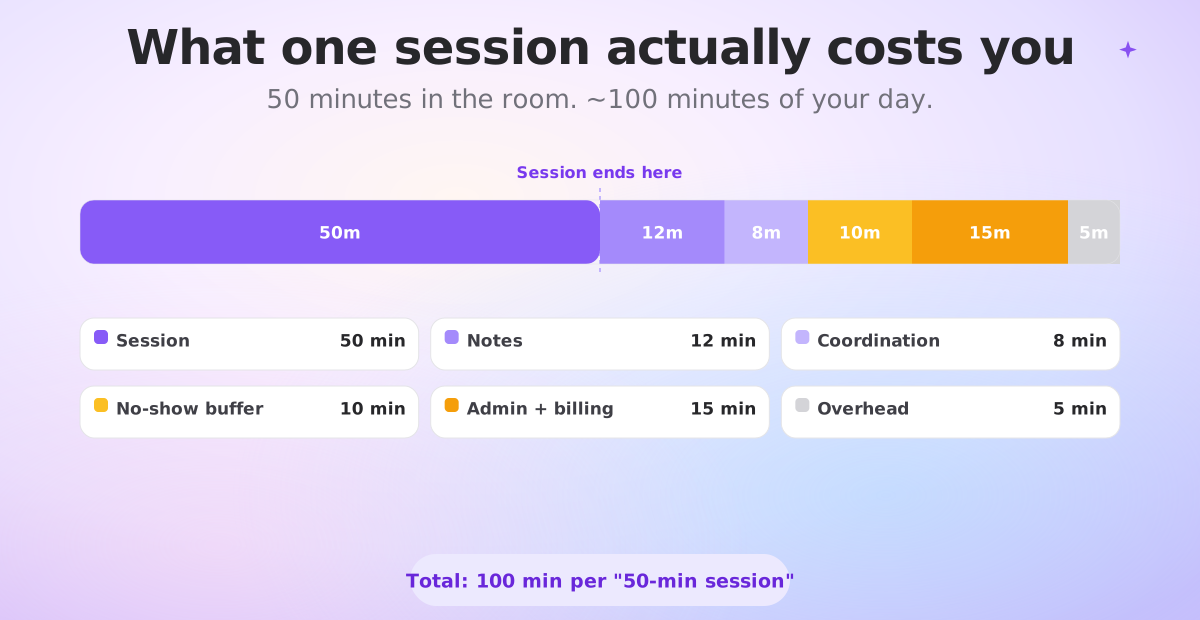
A useful exercise: estimate your actual unpaid hours per client per month (notes, coordination, occasional crisis calls) and factor that into what a session needs to earn, not just what feels competitive with the practice down the street.
The insurance vs. private-pay gap
Insurance reimbursement for a given session is usually meaningfully lower than what the same session would earn at a private-pay rate, sometimes by half or more, depending on the payer and your region. That's not a reason to avoid insurance entirely, it widens who can afford to see you, but it means your payer mix has a direct, calculable effect on revenue per hour.
If you're building a hybrid practice, know your actual reimbursement rates per panel before you commit to how many insurance slots you'll carry. A caseload that's 80% low-reimbursement insurance clients requires a very different number of weekly sessions to hit the same revenue as a caseload that's 80% private pay.
Sliding scale: structure it or skip it
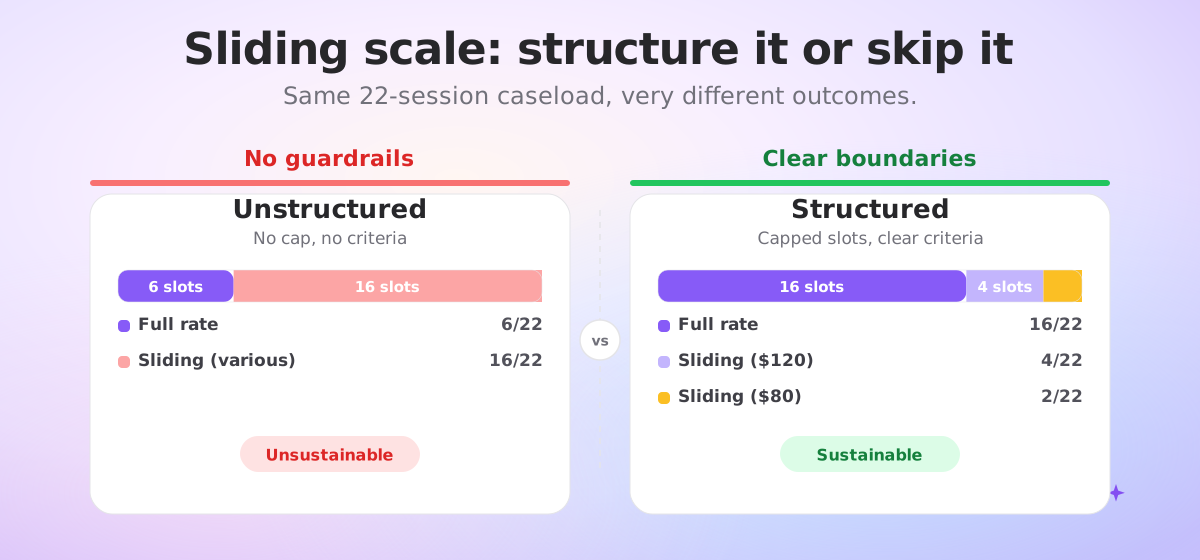
Sliding scale fees can be genuinely good practice: they widen access without you working for free. The failure mode is offering it without structure, no clear income criteria, no cap on how many sliding-scale slots exist, and ending up with most of your caseload at a reduced rate you can't sustain.
If you offer sliding scale, set clear criteria (often tied to income or documented financial hardship), cap the number of slots at any given time, and revisit the cap as your practice grows. A sliding scale that isn't capped isn't a sliding scale, it's just a lower rate you haven't admitted to charging everyone.
What therapists actually charge (and why ranges vary so much)
Private-pay rates vary widely by region, specialty, and credential type, high cost-of-living metro areas and specialized modalities (EMDR, certain couples work) tend to sit at the higher end, while general outpatient therapy in lower cost-of-living areas sits lower. Rather than anchoring to a single number, look at what comparable providers, similar license type, similar specialty, similar market, are actually charging in your specific area. Psychology Today profiles and local directory listings are a reasonable, current way to benchmark this yourself, since published national averages go stale fast and vary enormously by region.
When and how to raise your rates
Rates should move periodically, not just in a moment of financial desperation. An annual review is a reasonable default: look at your cost of living, your experience level, and what comparable providers charge now versus when you last set your rate.
When you do raise rates, give existing clients real notice, 60 to 90 days is common, and consider grandfathering current clients at their existing rate for some transition period if retention matters to you. New clients can start at the new rate immediately.
Common pricing mistakes
- Pricing only the session, not the job. Notes, coordination, and admin time are real costs that need to be in the number somewhere.
- Never revisiting the rate. A rate set five years ago and never adjusted is quietly a pay cut every year that passes.
- Unstructured sliding scale. Good intentions without a cap or clear criteria turn into an unsustainable caseload.
- Anchoring to national averages instead of your actual market. A published national number tells you very little about what your specific region and specialty actually support.
- Raising rates only when desperate. Reactive increases feel worse to clients and to you than a predictable, periodic review.
Once your rates are set, the administrative side, invoicing, tracking who's paid what, handling different rates for different clients, is its own headache. Upheal's payments features handle that part so the rate you decided on actually gets collected without extra manual tracking.
Frequently asked questions
How do I figure out what to charge for therapy sessions?
Start with what comparable providers in your specific region and specialty actually charge (directory listings are a good current source), then adjust for your unpaid hours per client, your overhead, and your experience level. Don't anchor to a national average; regional variation is too large for that to be useful.
Is it normal for insurance reimbursement to be lower than private-pay rates?
Yes. Reimbursement for the same session is usually meaningfully below what a private-pay client would pay, the exact gap depends on the payer and region. Know your actual per-panel reimbursement before deciding how much of your caseload to build on insurance.
How often should I raise my rates?
An annual review is a reasonable default, even if you don't raise rates every year. Waiting five or more years without any review usually means you're quietly behind cost of living.
How much notice should I give clients before a rate increase?
60 to 90 days is common courtesy, giving clients time to plan or, if needed, transition. Some practices grandfather existing clients at their old rate for a period rather than raising it immediately for everyone.
Should I offer a sliding scale?
It can work well if it's structured: clear income criteria and a capped number of slots. An unstructured sliding scale tends to expand until it's unsustainable.