
DAP notes for therapists: format, examples, and tips

TL;DR
- A DAP note organizes session documentation into three sections: Data, Assessment, and Plan
- Data combines what SOAP splits into two sections — the client's self-report and your clinical observations go together
- Assessment is your clinical judgment: where the client is, what's shifting, and any risk considerations
- Plan covers next steps, homework, and the next appointment
- DAP is faster to write than SOAP and works well for outpatient private practice; SOAP is better suited to settings that require strict separation of subjective and objective findings
A DAP note is a clinical documentation format that organizes each therapy session into three sections: Data, Assessment, and Plan. It's one of the most widely used progress note formats in outpatient mental health practice because it's efficient to write and complete enough to meet clinical and insurance standards.
This guide covers what each DAP section should include, how to write one step by step, a complete example, and how DAP compares to SOAP so you can choose the right format for your practice.
The DAP format: what goes in each section
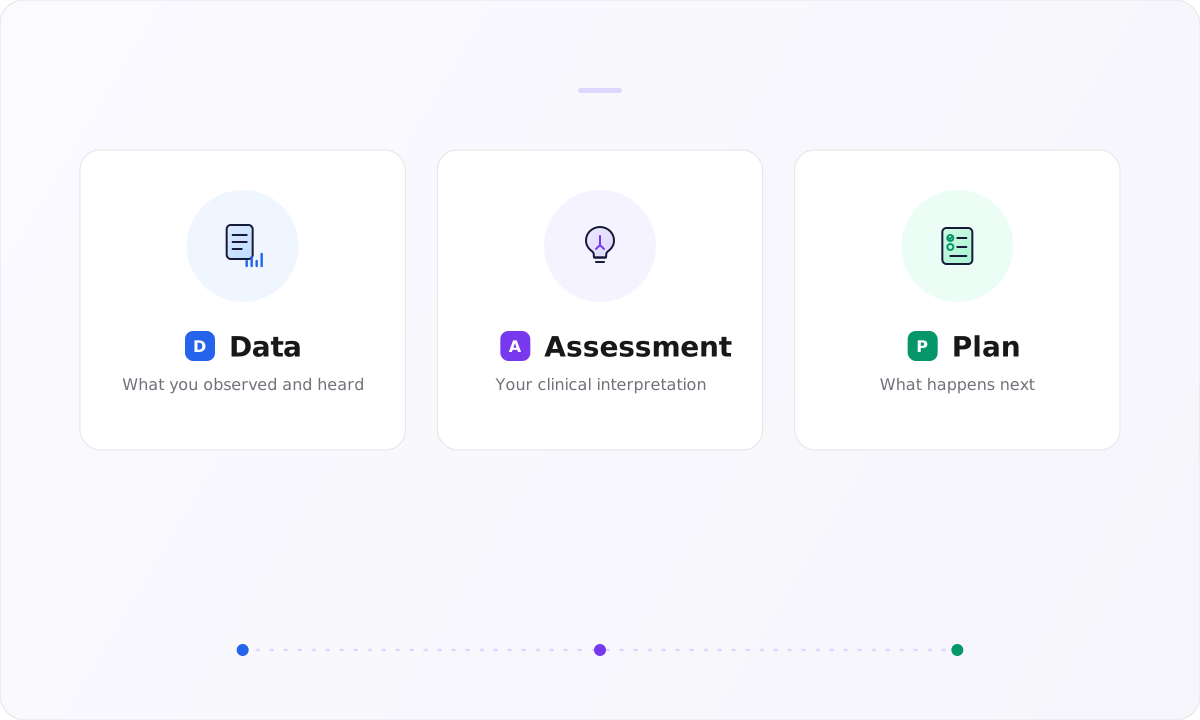
DAP stands for Data, Assessment, Plan. Each section captures a distinct type of clinical information.
D: Data
Data is the most comprehensive section. It combines what SOAP separates into Subjective and Objective: the client's self-report and your direct clinical observations, all in one place.
What belongs in Data:
- What the client said they wanted to work on in this session
- Direct quotes from the client where they add clinical context
- How the client presented: affect, mood, behavior, speech, and any notable changes from baseline
- What happened in the session: topics discussed, activities completed, any significant disclosures
- Safety-relevant information: any mention of self-harm, harm to others, or crisis concerns
Data is descriptive and factual. Your interpretation goes in Assessment, not here. Write what you observed and what the client reported. Keep clinical judgment out of this section.
A: Assessment
Assessment is your clinical analysis of the session. This is where your professional judgment lives.
What belongs in Assessment:
- Your interpretation of what the Data means clinically
- The client's progress toward treatment goals: improving, maintaining, regressing
- Symptom severity and any changes since the last session
- Diagnostic impression and whether it remains consistent
- Risk assessment: current safety status, any changes in risk level
- Your clinical reasoning for any decisions made in the session
Assessment is the section that most distinguishes a clinician's note from a summary. A note that skips or skimps on Assessment looks incomplete and is harder to defend in an audit.
P: Plan
Plan documents what comes next for the client's care.
What belongs in Plan:
- Any between-session tasks or homework assigned
- Topics or goals to address in the next session
- Referrals made or pending
- Any changes to the treatment plan or therapeutic approach
- Next appointment date
- Any coordination of care actions (consultation requests, releases signed, collateral contacts)
Plan should be specific enough that another clinician could pick up the client's care and understand what's in motion.
How to write a DAP note: step by step
- Write immediately after the session. Clinical details are sharpest in the first 15 minutes after a session ends. Block time for notes before your next appointment.
- Start with the Data section. Open with a one-sentence summary of what the session focused on, then add the client's presenting concerns, direct quotes where useful, and your clinical observations. Keep it factual.
- Write your Assessment. Move from what you observed to what it means clinically. State the client's progress toward each active treatment goal. Include risk status even when there are no concerns — "no current safety concerns" is a complete assessment of risk.
- Document the Plan. List homework, next session focus, and next appointment. If you made any referrals or coordinated with another provider, note it here.
- Review before signing. Check for vague language ("client did well" doesn't document anything), missing risk assessment, and any fields left blank. Sign and timestamp.
Upheal's AI clinical notes generate a structured DAP draft from the session recording. You review, edit, and sign — most Upheal users are done in under five minutes. See how it works with Upheal's documentation tools.
DAP note example
This is a sample for training purposes only. It doesn't represent a real client record and shouldn't be used as clinical documentation without therapist review and customization for the individual client.
Client: R.T. | Date: 06/30/2026 | Duration: 50 min | Type: Individual, telehealth | CPT: 90837
D (Data): Client arrived on time and appeared engaged throughout the session. Reports a difficult week following a conflict with their supervisor at work: "I shut down completely. I didn't say anything and then cried in my car afterward." Identifies shame and fear of confrontation as primary drivers. Completed the thought record assigned at the prior session and brought it to session. Thought record revealed a recurrent automatic thought pattern: "If I speak up, something bad will happen." No safety concerns reported or observed.
A (Assessment): Client is making progress toward goal of improving assertiveness and distress tolerance in interpersonal conflict. Completion of thought record between sessions suggests increasing engagement with CBT skills outside session. The identified automatic thought ("If I speak up, something bad will happen") is consistent with the avoidance pattern documented in the treatment plan and represents a productive focus for continued intervention. Affect was constricted at session open but visibly shifted during reframing exercise. No current safety concerns. Diagnosis consistent with adjustment disorder with mixed anxiety and depressed mood (F43.23).
P (Plan): Client to practice one assertive response before next session using the DESC framework introduced today. Will write it down and bring to next session for review. Next appointment: 07/07/2026. Continue CBT focus on automatic thought patterns in interpersonal contexts.
DAP vs SOAP: which format should you use?
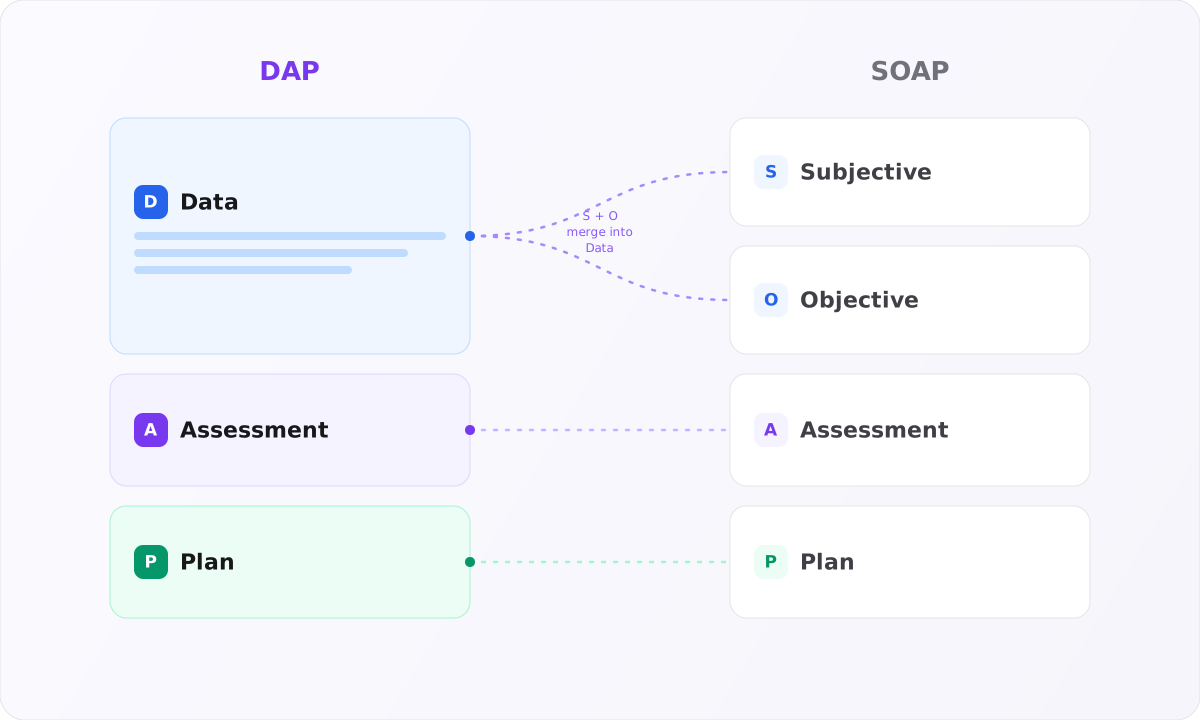
The main difference between DAP and SOAP is how they handle the client's self-report and the clinician's observations: SOAP separates them into Subjective (S) and Objective (O), while DAP combines both into a single Data section.
Use DAP when:
- You're in outpatient private practice and want an efficient, readable format
- Your setting doesn't require strict separation of subjective and objective findings
- You prefer fewer sections with more flexibility in how you organize information
- You want a format that's faster to write without sacrificing completeness
Use SOAP when:
- Your setting or employer requires it (common in medical, inpatient, and integrated care settings)
- Your insurer or credentialing body specifies SOAP format
- You're documenting clients where objective clinical measurements (vitals, standardized scores) need to be clearly separated from client self-report
- You're collaborating with medical providers who expect SOAP structure
Neither format is clinically superior. Consistency matters more than format choice. Pick one and apply it across your caseload. For a breakdown of the SOAP format, see Upheal's guide to AI SOAP notes and for a broader overview of progress note structure, see our progress note template guide.
Common mistakes in DAP notes
Putting clinical interpretation in the Data section. Data is descriptive. "Client seemed resistant" is an interpretation — it belongs in Assessment. "Client gave one-word answers and broke eye contact repeatedly" belongs in Data.
Skipping the Assessment. Assessment is where your clinical value shows up in the record. A note with a full Data section and a one-line Assessment looks incomplete. It's also the section most likely to be questioned in an audit or licensing board review.
Vague Plans. "Continue current treatment" isn't a plan. Specific homework, a defined focus for the next session, and a next appointment date are the minimum.
Cloning notes across sessions. Copy-pasting a previous session's note is a compliance risk. Each note should reflect what actually happened in that specific session. Even clients with slow-moving presentations have session-specific content worth documenting.
Writing too long. Most outpatient DAP notes should run 150 to 300 words. Longer notes aren't more defensible — they're harder to read and often padded with generic language. Specific and concise is the goal.
Frequently asked questions about DAP notes
What does DAP stand for in therapy notes?
DAP stands for Data, Assessment, Plan. It's a progress note format used in mental health practice that organizes session documentation into three sections: what happened and was observed (Data), the clinician's clinical interpretation (Assessment), and next steps in the client's care (Plan).
What goes in the Data section of a DAP note?
The Data section includes both the client's self-report and the clinician's direct observations from the session. This covers what the client said they wanted to work on, significant quotes, how they presented (affect, mood, behavior), what occurred in the session, and any safety-relevant information. It's the section that combines what SOAP separates into Subjective and Objective.
How is DAP different from SOAP?
DAP combines the client's self-report and clinician's observations into a single Data section, while SOAP separates them into Subjective (S) and Objective (O). Both formats include Assessment and Plan sections. SOAP is more granular and is commonly required in medical and inpatient settings. DAP is often preferred in outpatient private practice for its efficiency.
How long should a DAP note be?
Most outpatient DAP notes run 150 to 300 words. The goal is a note that's specific enough to document the session accurately and concise enough to write consistently after every appointment. Longer notes aren't more defensible — vague language padded to fill space is more of a liability than a short, specific note.
Can I use AI to write DAP notes?
Yes, with appropriate oversight. AI tools like Upheal generate a structured DAP draft from the session recording, which you review, edit, and sign. You remain clinically and legally responsible for every note. Upheal's individual provider plan includes AI notes in DAP and other formats as part of the full practice management platform.
Write notes that hold up
A well-written DAP note takes about five minutes when you have the right system in place. It documents your clinical reasoning, protects your practice, and creates a record that supports continuity of care.
Upheal generates a structured DAP draft from each session so you're editing rather than writing from scratch. You stay in control of every word.