
CPT codes for therapists: A complete billing and reimbursement guide
TL;DR
- CPT codes tell an insurer exactly what service you provided, and using the wrong one is the single biggest cause of claim denials for therapists.
- Session length codes (90832, 90834, 90837) cover individual therapy, while separate codes exist for intakes, family sessions, and group work.
- Add-on codes and telehealth modifiers change how a claim is processed, even when the core session code is correct.
- Consistent, accurate time documentation is what protects every code you bill.
Most of the denied claims a therapist deals with come down to one of two things: the wrong session-length code, or a missing modifier. This guide covers the CPT codes you will actually use, how they differ, and how to bill each one correctly.
What are CPT codes and why do they matter for therapists?
CPT codes are standardized codes that tell an insurance company exactly what clinical service you provided during a session, and they are what your reimbursement is based on. Every claim you submit needs the correct CPT code paired with the correct diagnosis code, or the claim can be delayed, reduced, or denied outright.
The American Medical Association maintains the official CPT code set, including the behavioral health codes therapists use most.
The core CPT codes every therapist should know
Choosing the right session-length code: 90832 vs 90834 vs 90837
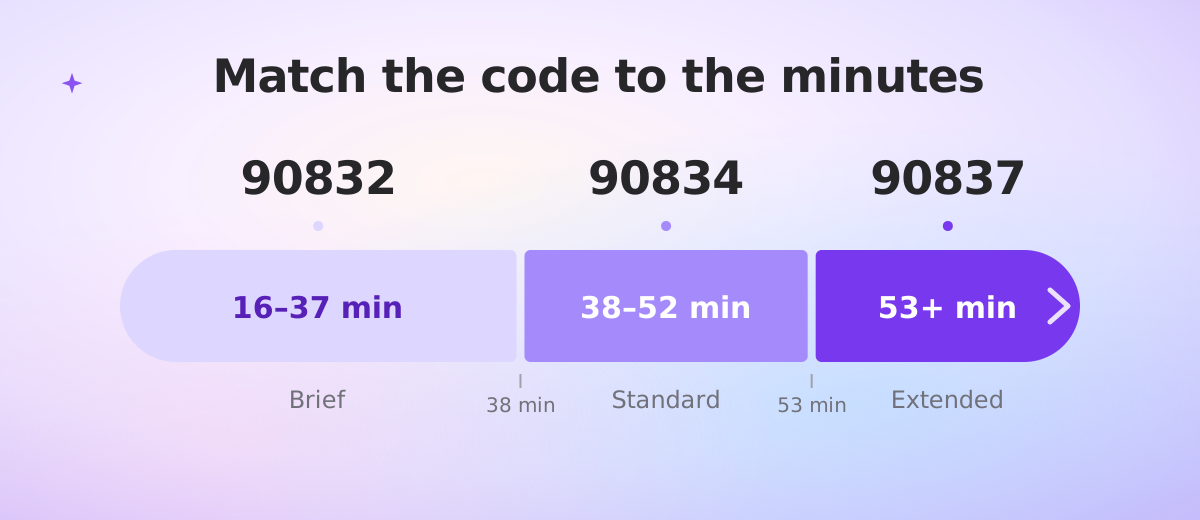
The right code depends entirely on the actual minutes you spent with the client, not the scheduled slot. Use 90832 for brief sessions under 38 minutes, 90834 for the standard 45-minute session, and 90837 for extended sessions of 53 minutes or more.
This is the single most common coding error therapists make, and it deserves its own deep dive. For the full breakdown of documentation requirements, reimbursement variation, and audit risk specific to the most commonly billed code, see our complete guide to CPT code 90834.
Add-on codes and modifiers therapists commonly use
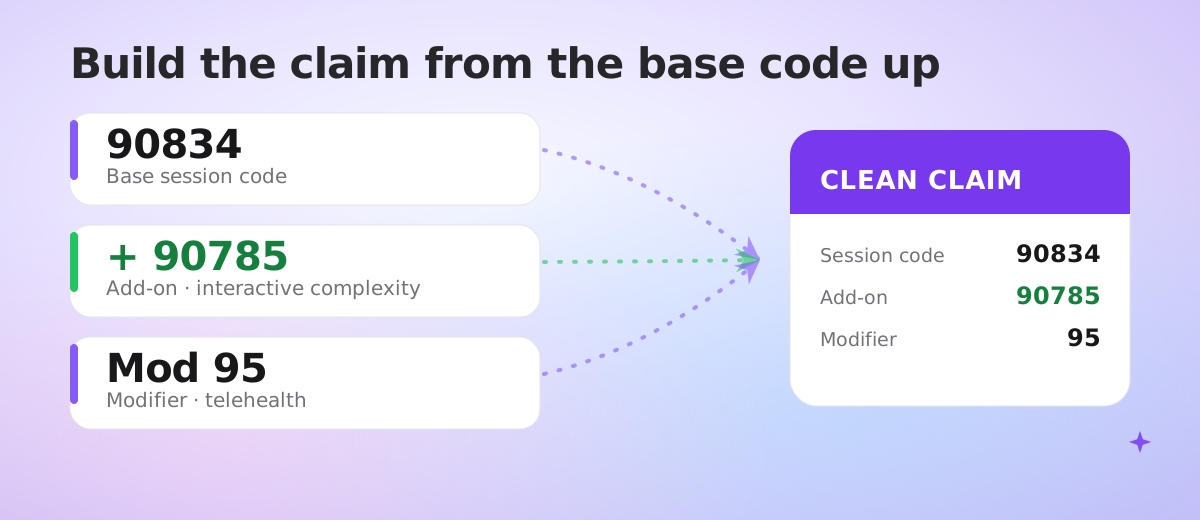
- 90785 (interactive complexity): billed alongside a session code when communication involves a third party, an interpreter, or other complicating factors, such as sessions with young children or clients with limited communication ability.
- Modifier 95: required by many payers for telehealth sessions billed as if delivered in person. Check your specific payer, since requirements are not universal.
- Place of service codes: must match where the session actually happened, home, office, or telehealth, since a mismatch between place of service and modifier is a common flag.
How do you bill CPT codes correctly, at a glance?
- Match the code to the actual minutes documented in the session, not the scheduled length.
- Apply the correct modifier for telehealth or add-on services, based on your specific payer's rules.
- Confirm payer-specific coverage before you submit, since prior authorization thresholds vary by plan.
- Submit clean claims with a diagnosis code that matches the treatment plan on file.
A compliance check before submission catches most of this automatically. Upheal's compliance checker reviews notes for documentation gaps like missing time details or mismatched diagnosis codes before a claim goes out.
Common CPT coding mistakes that cause denials
- Billing a session-length code that does not match the documented time.
- Leaving out a required modifier for telehealth or add-on services.
- Using an intake code (90791) for what was actually a first therapy session rather than an evaluation.
- Inconsistent diagnosis codes across sessions with no clinical justification for the change.
Accurate coding protects your revenue and your standing with the payers you rely on, and it starts with documentation that's consistent from the first session.
Frequently asked questions
What CPT code do therapists use most often?
Therapists most often use CPT code 90834, which covers a standard 45-minute individual psychotherapy session.
It is followed closely by 90837 for longer sessions and 90791 for intake evaluations.
What's the difference between an intake code and a session code?
An intake code (90791) covers the initial diagnostic evaluation, while session codes (90832, 90834, 90837) cover ongoing therapy sessions.
You cannot bill an intake code and a session code for the same visit; the intake happens once, at the start of treatment.
Do group therapy sessions have their own CPT code?
Yes, group psychotherapy has its own code, 90853, separate from the individual session codes.
Group billing has its own documentation requirements, since a single note typically needs to reflect each participant's individual response to the group process.
Does Upheal help with CPT coding?
Upheal's compliance checker reviews your notes for documentation gaps, like missing time details or mismatched codes, before you submit a claim.
It does not choose the code for you, but it flags the most common mismatches before they become denials.
The bottom line
Most CPT coding problems trace back to two things: the wrong session-length code, or a missing modifier. Get comfortable with the core codes above, document actual session time consistently, and check payer-specific rules before you submit.
Start free at upheal.io/signup and keep your codes, notes, and time records consistent from the first session.


