A therapist's billing guide to CPT code 90834
.svg)
TL;DR
- CPT code 90834 covers an individual psychotherapy session that runs 38 to 52 minutes, most often billed as a standard 45-minute session.
- It's easy to confuse with 90837 (53 minutes or more) and 90832 (16 to 37 minutes), and billing the wrong one is a common trigger for claim denials and audits.
- Reimbursement varies by payer, license type, and region, so check your own fee schedule rather than relying on a single published rate.
- Clean, consistent time documentation is the single biggest thing that protects you if a payer ever reviews the claim.
If you bill insurance as a therapist, you have probably used CPT code 90834 more than any other code, and it is also one of the easiest to bill incorrectly. A few minutes of imprecise time tracking or a mismatched add-on code can turn a routine claim into a denial, or worse, an audit flag months later.
This guide covers what CPT code 90834 is, when to use it instead of a neighboring code, how to bill it correctly, and the mistakes that cause the most rework.
What is CPT code 90834?
CPT code 90834 is the billing code for an individual psychotherapy session lasting 38 to 52 minutes, most commonly billed as a 45-minute session. It applies to therapists, psychologists, and other licensed mental health professionals providing individual psychotherapy to a client, whether the client is an adult, adolescent, or child.
According to the American Medical Association's CPT code definition, the code covers psychotherapy delivered through any evidence-based modality, such as cognitive behavioral therapy, psychodynamic therapy, or supportive counseling, and does not require a specific technique.
When should you use CPT code 90834 instead of 90837?
Use CPT code 90834 for sessions that run 38 to 52 minutes, and use CPT code 90837 for longer sessions of 53 minutes or more. The distinction matters because payers track session length closely, and billing the wrong code for the actual time spent is one of the most common reasons claims get flagged.
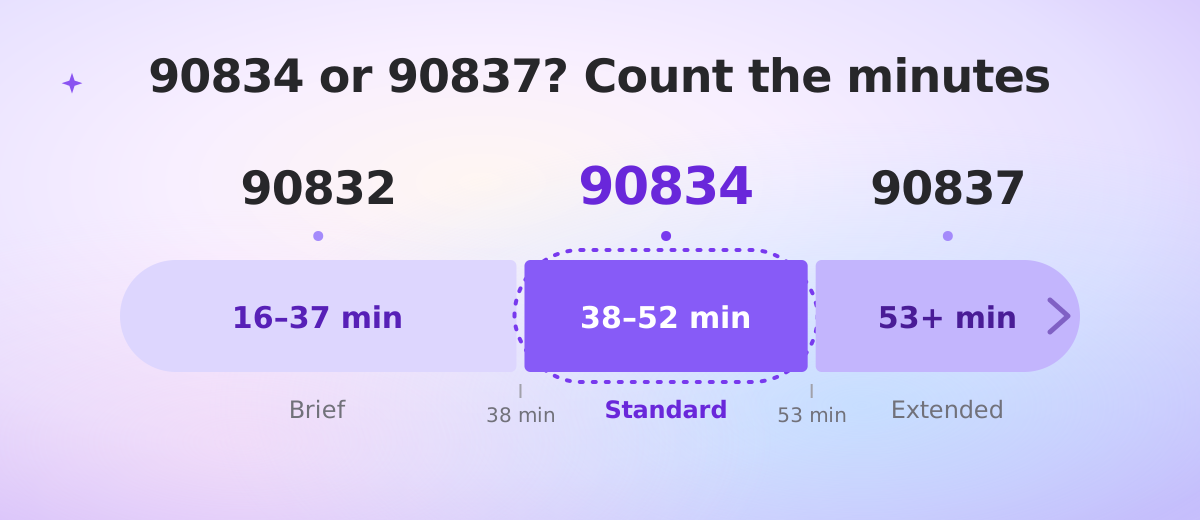
Here is how the individual psychotherapy codes compare:
The APA Services psychotherapy coding page has the full breakdown by license type and setting.
How do you bill CPT code 90834 correctly?
- Confirm the actual session length in your documentation. Record start and end time, not just the scheduled slot. If a session runs 36 minutes, it is 90832, not 90834, even if it was scheduled for 45.
- Match the code to the minutes you actually spent with the client. Scheduling software defaults are not a substitute for what happened in the room.
- Apply the correct place-of-service and modifier codes for telehealth sessions. Many payers require a specific modifier, commonly 95, for telehealth claims.
- Check payer-specific requirements before you submit. Some plans have their own documentation thresholds or require prior authorization after a certain number of sessions.
- Submit clean claims with a diagnosis code that matches your treatment plan. Mismatched diagnosis and procedure codes are a frequent cause of denials.
A compliance check before you submit catches most of these issues before they become a denial. Upheal's compliance checker reviews your notes for documentation gaps, like missing session-time details or inconsistent diagnosis codes, before the claim goes out.
If billing and documentation together are taking up more of your week than the sessions themselves, that is worth solving directly. See how Upheal supports individual providers with billing, notes, and scheduling in one place.
What does CPT code 90834 reimburse?
Reimbursement for CPT code 90834 varies significantly by payer, license type, and region, so there is no single rate you can rely on across the board. Medicare publishes its own fee schedule as a reference point, but commercial payers and Medicaid programs each set their own rates, and those rates change periodically.
The most reliable approach is to check your specific payer's current fee schedule rather than using a number you saw somewhere else. If you are credentialed with multiple payers, it is worth reviewing your top three or four fee schedules at least twice a year.
Common CPT 90834 billing mistakes that trigger audits
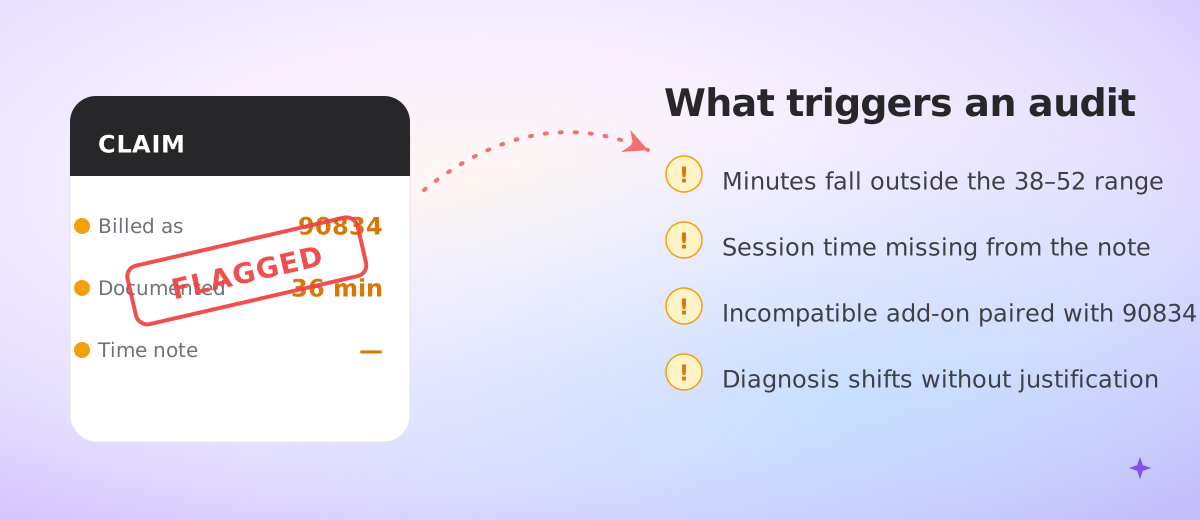
- Billing 90834 for sessions that actually ran under 38 minutes or over 52. This is the single most common mismatch and the easiest for a payer to catch.
- Missing or inconsistent time documentation. If your notes do not clearly show session start and end time, you have nothing to point to if a claim is questioned.
- Pairing 90834 with an incompatible add-on code. Not every add-on code is valid alongside every session-length code.
- Inconsistent diagnosis codes across sessions for the same client. A diagnosis that shifts without clinical justification is a common audit trigger.
Getting this right protects both your revenue and your standing with the payers you rely on. Documentation burden is one of the top reasons therapists say administrative work eats into their week, and clean, consistent notes are what prevent most of these mistakes in the first place. Upheal's documentation tools are built to keep session notes and time records consistent without adding extra work.
Frequently asked questions
What is CPT code 90834 used for?
CPT code 90834 is used to bill an individual psychotherapy session lasting 38 to 52 minutes, most often a standard 45-minute session with an adult, adolescent, or child client.
It covers psychotherapy delivered through any evidence-based approach and does not require documenting the specific therapeutic technique used, only the diagnosis, session length, and clinical content.
How long is a CPT code 90834 session?
A CPT code 90834 session runs 38 to 52 minutes, with 45 minutes as the typical target.
If a session runs shorter than 38 minutes, it should be billed as 90832. If it runs 53 minutes or longer, it should be billed as 90837.
What's the difference between 90834 and 90837?
The difference is session length: 90834 covers 38 to 52 minutes, while 90837 covers 53 minutes or more.
Both codes cover individual psychotherapy and are billed the same way otherwise, but payers track the time difference closely, so accurate documentation of session length is what determines which code is correct.
Does CPT code 90834 require prior authorization?
It depends on your payer, not on the code itself.
Some commercial payers and Medicaid plans require prior authorization after a set number of sessions, regardless of which psychotherapy code you bill. Check your specific payer's policy, since requirements vary and change.
The bottom line
CPT code 90834 is straightforward once you separate the two things that actually matter: the real length of the session, and documentation that backs it up. Get those right, and reimbursement follows. Get them wrong, and you are looking at denials or, eventually, an audit.
If documentation and billing consistency is the part that is eating your week, start free at upheal.io/signup and see how Upheal keeps your notes, time records, and compliance checks in one place.