Notes done before the next session.
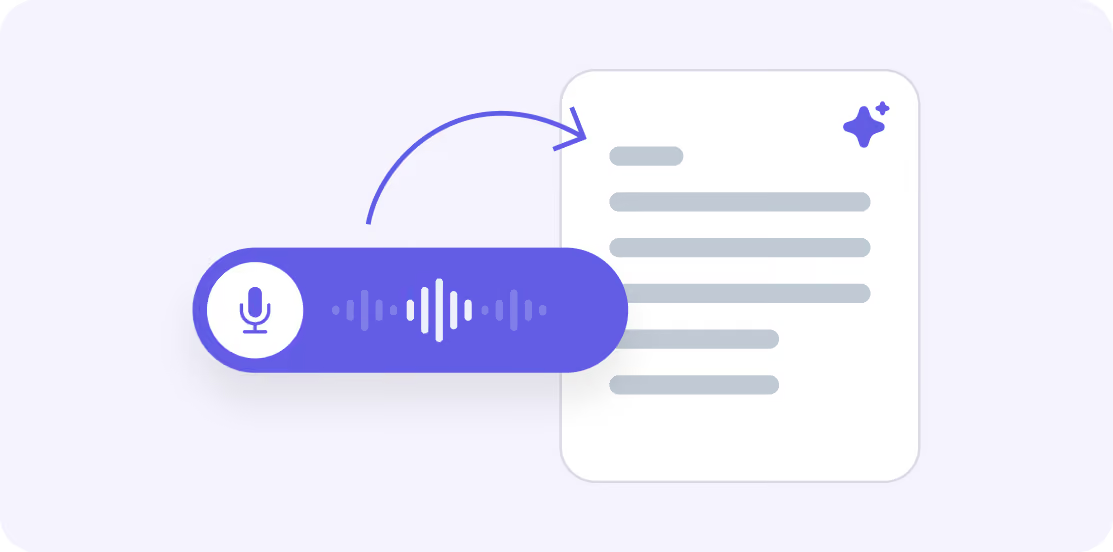
Record or upload a session. Upheal drafts the note and treatment plan; your clinician reviews and signs.

Less admin for your clinicians. A clearer view for you. Bring AI therapy notes, scheduling, and billing together, or start with AI notes alongside your current EHR.

We cut documentation from 10 to 15 hrs a week to about 2.
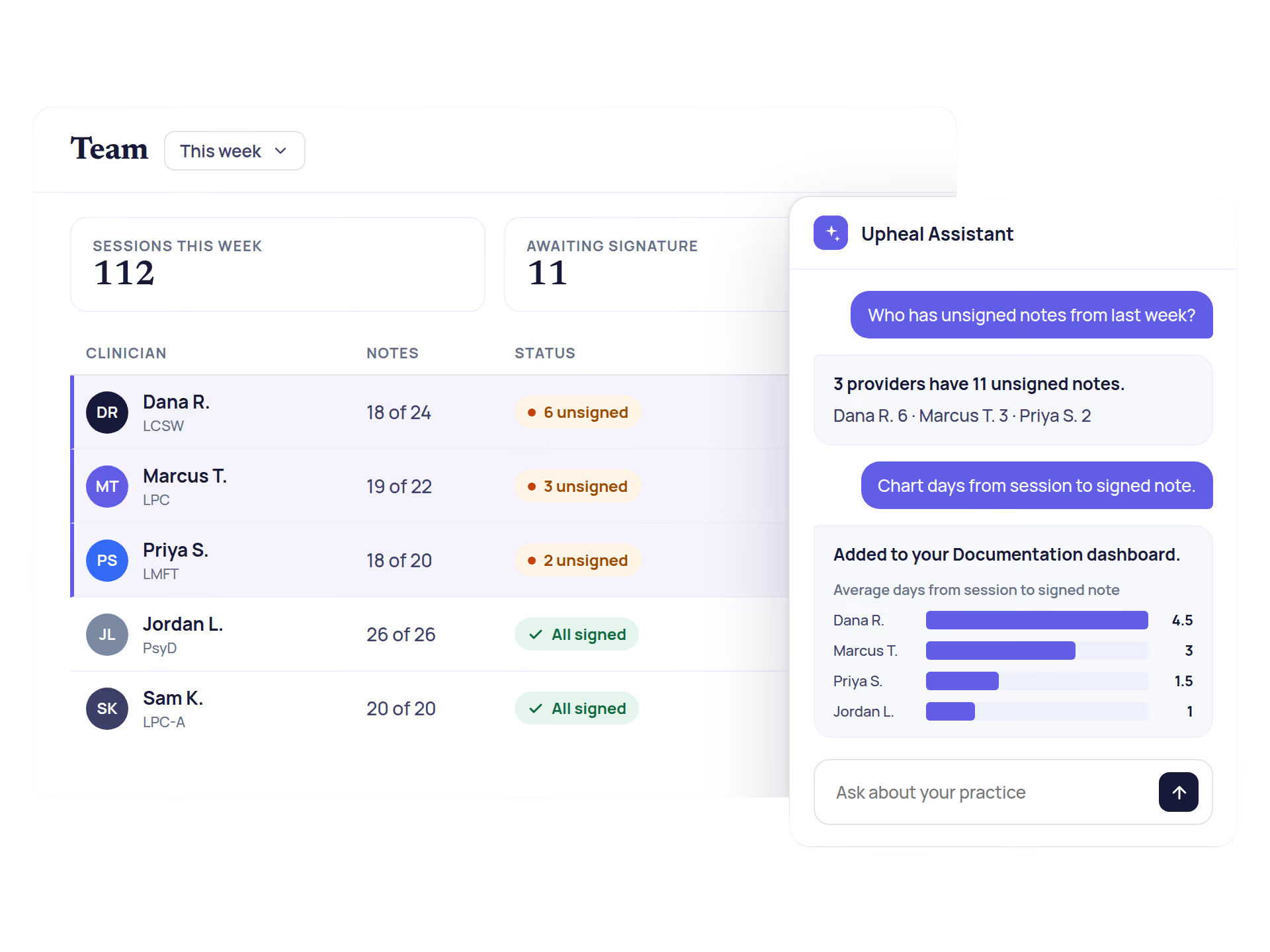









Your clinicians finish notes before the next client. You pay for the work, not the headcount.
Record or upload a session. Upheal drafts the note and treatment plan; your clinician reviews and signs.
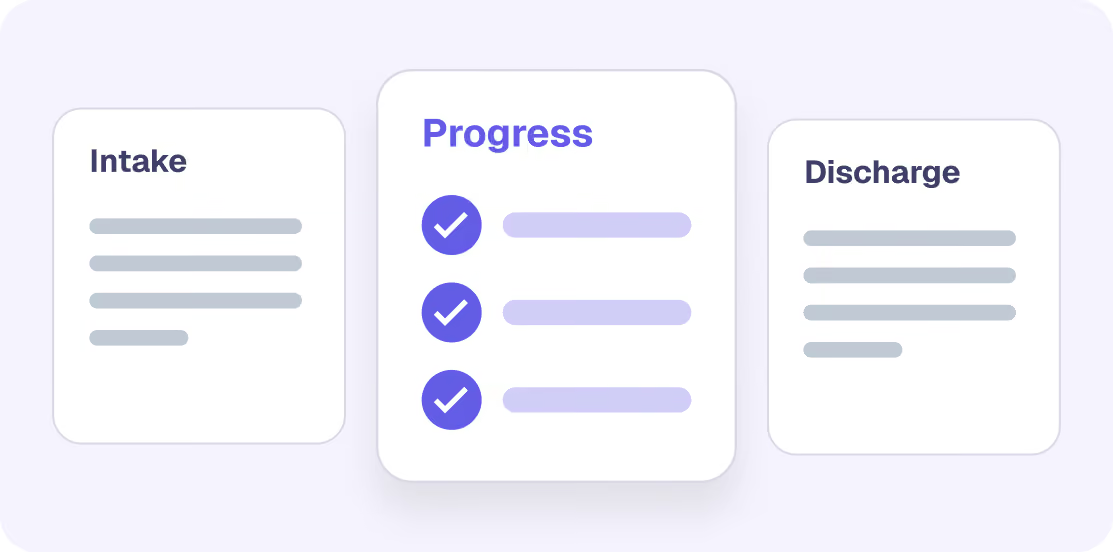
Build one shared template. Every note follows the same structure, so your team stays consistent.
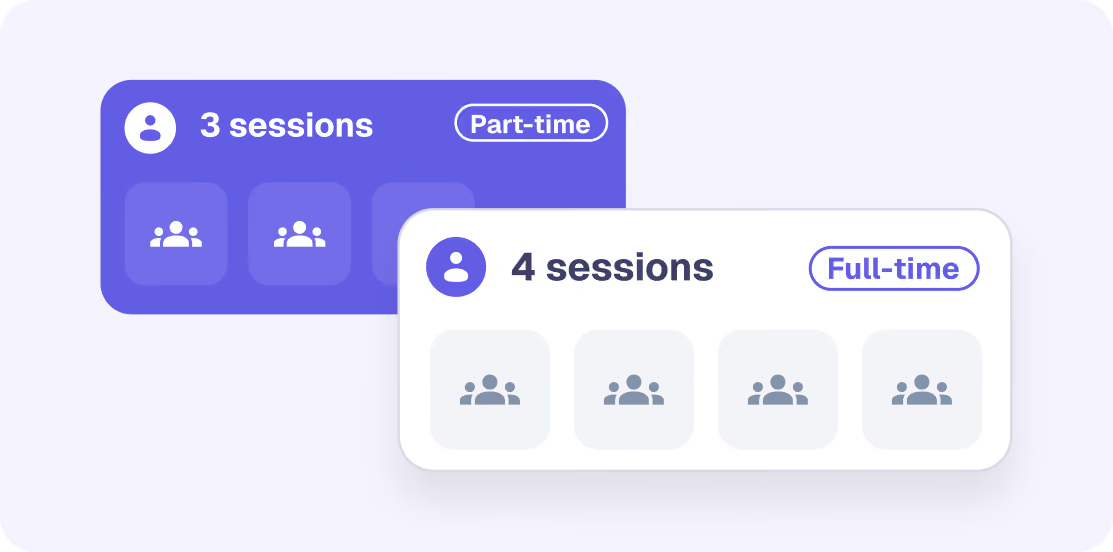
Pay for sessions, not seats. Part-time clinicians cost less, and adding a provider doesn’t add a flat fee.


Four roles in the Upheal EHR. Clinical records stay with clinical roles.
Sees every client and every provider. Manages the team and practice settings.
Works with their own clients: sessions, notes, treatment plans, scheduling, and messages. Can’t see colleagues’ clients.
Handles claims, invoices, and payments for the whole practice. Sees diagnoses for billing, never session notes.
Runs the front desk: clients, calendars, billing, and templates. No caseload, no clinical notes.
When clinicians take paperwork home, it’s one more reason they leave. Upheal cuts hours of documentation down to minutes a session without changing your EHR.
Kept their EHR. Took back their evenings. About a dozen clinicians use Upheal alongside their EHR, with shared templates managed centrally.
It allows us to be more present. Instead of trying to write in your head, you’re just making sure you hit those key questions you put in your template,
and then boom.


I’ll guide your move and stay your contact after launch.
Every group gets a dedicated customer success manager. AI migration brings over clients, notes, and history from any EHR, and you decide what moves.
Account setup, your team’s needs, and how to pull your export.
Your admin uploads the export and reviews the AI mapping, with us on the call.
Templates, roles, and training. Most teams do it themselves.
Your data and your clients’ data are handled with extreme care.


Both. Use Upheal for AI therapy notes alongside your current EHR, or use the full behavioral health EHR for notes, scheduling, insurance billing, payments, and practice reporting.
Three ways. Smart Fill in Upheal’s Chrome extension fills your EHR’s note form in one click, section by section, in SimplePractice, TherapyNotes, Owl Practice, Jane App, and Healthie. With any other EHR, copy and paste the signed note. If you want the systems connected directly, your developers can build an integration with the Upheal API. Ask about access on the demo.
Yes. You can use shared templates or tailor them by program or clinician. The Upheal EHR has four roles, with clinical and non-clinical access separated. Compare the roles and permissions above.
Yes, from any EHR, with your customer success manager guiding each step. Your admin pulls an export from your current EHR (our support articles show how), then uploads it on a migration call. AI brings over clients, notes, and history, and your admin reviews the client mapping. Using AI notes only? Migration is optional, but bringing over your client list or past notes gives new notes more context.
Tell us on the demo and we will say when, or whether. Supervision workflows beyond co-signing and advanced note customization (dropdown and checkbox fields inside a note) are the two things group practices ask for most that are not built yet. Both are on the public roadmap.
Upheal is HIPAA compliant and independently audited for SOC 2 Type II. A business associate agreement is included, and session audio is deleted by default after the note is created. Read the trust page for details.
Yes. Keep your current scheduling and billing while your clinicians record or upload sessions, review AI drafts, and sign notes in Upheal. You still get your own templates, co-signing, and an Assistant that answers across your team’s notes, so supervisors and admins can see where documentation stands.
Supervisors co-sign notes inside Upheal. Supervision workflows beyond co-signing are still in development and listed on the public roadmap.
Every group practice gets Reports: five dashboards plus a library of practice reports. With AI notes only, they cover documentation. The full EHR adds sessions, billing, and payments. Ask the Assistant a question, or describe a chart and add it to a dashboard. Export the numbers as a spreadsheet.
SimplePractice and TherapyNotes charge a flat fee for every clinician seat and add AI notes as a paid extra. Upheal includes AI notes and compliance checking for every clinician and bills for sessions actually held, so a part time provider costs less than a full time one. Read the full comparison with SimplePractice or with TherapyNotes.
General scribes are built for a 12 minute medical visit. Upheal is built for a 50 minute therapy session. It knows what a golden thread is, what a payer means by medical necessity, and which sections an auditor reads first. A general scribe gives you a note that looks right. Upheal gives you one that holds up.
Yes. AI notes work at any size, from a two-person practice to organizations with thousands of therapists. The full EHR is built for group practices of 2 to 25 providers. Larger team or specialized workflows? Use the demo to review your needs, including supervision, note customization, and billing.
Walk through your team’s documentation, reporting, and billing needs. Explore using Upheal alongside your current EHR or moving your practice onto it.