
SEO for therapists: a practical checklist for private practice
Most therapists don't lose potential clients because they're fully booked. They lose them because Google can't find them. A client searching "anxiety therapist near me" or a specialty plus their city never sees a practice that ranks on page three, no matter how good the fit would have been.
SEO for therapists means making your website and online profiles easy for both search engines and prospective clients to find, read, and trust. It is not about tricking Google. It is about naming your specialty clearly, showing up in local results, and making it obvious how someone books a session with you.
This checklist walks through the concrete, non-technical steps that move the needle first, in the order that gets you found fastest.
TL;DR
- Claim and fully complete your Google Business Profile before touching anything else.
- Fix your title tag and meta description so they name a specialty and a location.
- Add a visible, one-click booking link on every page of your site.
- Build a handful of consistent directory listings (Psychology Today, GoodTherapy, your state association).
- Publish a few pages that answer the specific questions your ideal clients are already searching.
What does SEO actually mean for a therapy practice?
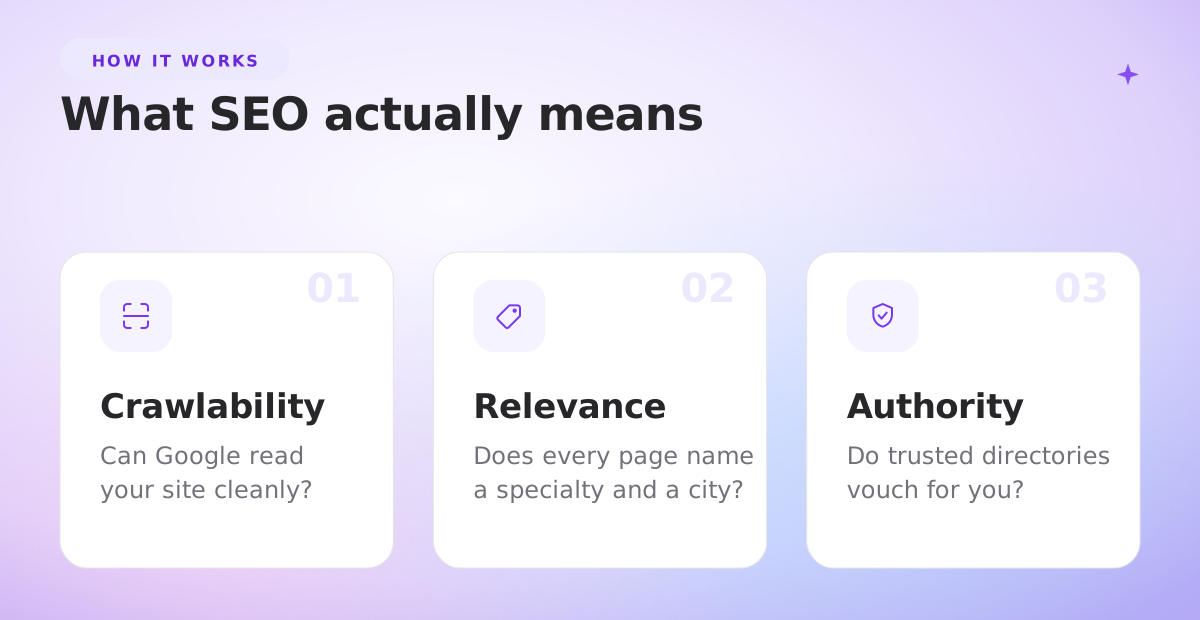
SEO for a therapy practice means showing up when someone in your area searches for the kind of help you provide. It works through three things together: how easily Google can read your site (technical basics), how clearly your pages signal your specialty and location (relevance), and how much other trusted sites and directories vouch for you (authority).
You don't need to become a marketer to do this well. Most of what moves the needle for a solo or small group practice is the checklist below, done once and kept current.
The SEO checklist for therapists
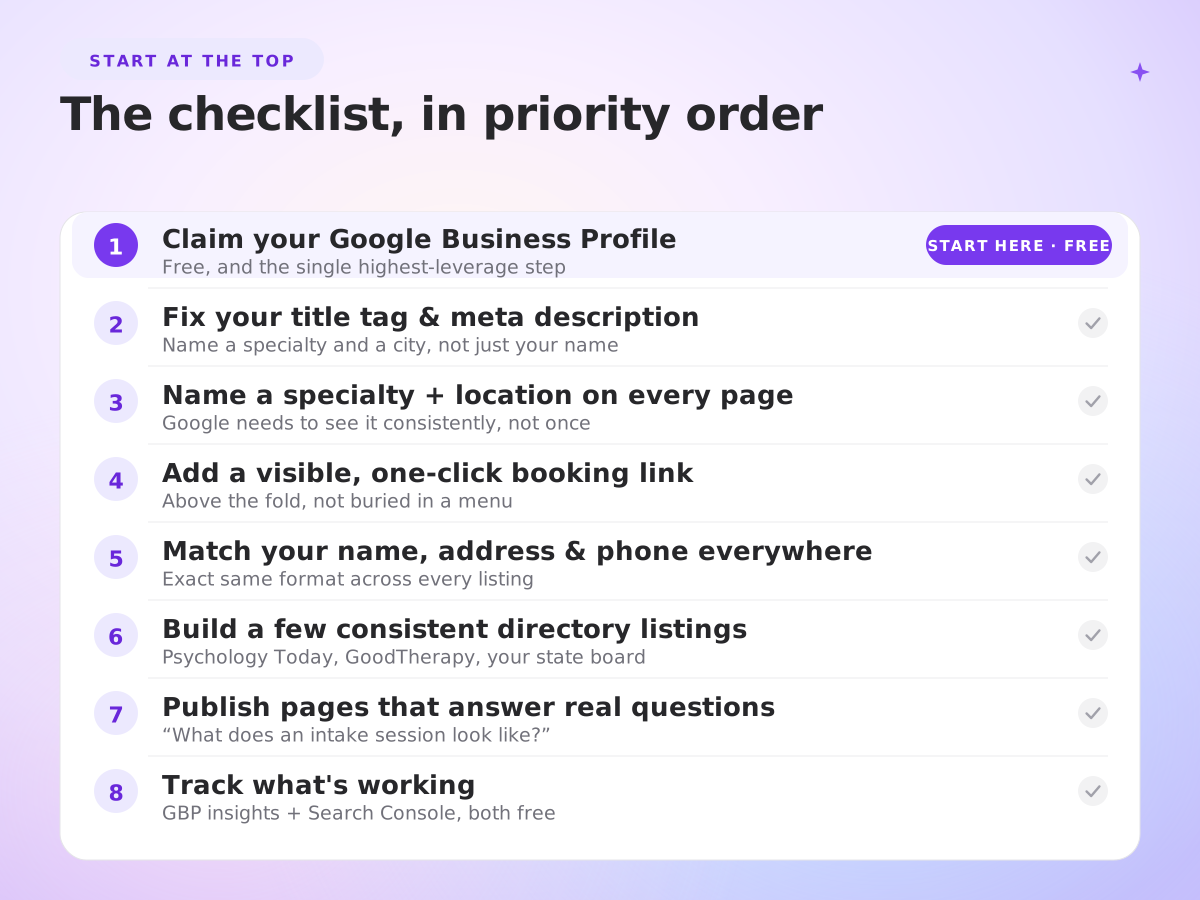
- Claim and complete your Google Business Profile. This is the single highest-leverage step, and it's free. Add your specialty, service area, hours, phone number, and a handful of interior and exterior photos if you have an office. An incomplete or unclaimed profile is the most common reason a practice is invisible in local map results. See Google's guide to claiming a Business Profile for the exact steps. [outbound: add rel=nofollow on publish]
- Fix your title tag and meta description. Every page on your site has a title tag (what shows as the blue link in Google) and a meta description (the snippet underneath). Both should name a specialty and a city, for example "Anxiety Therapist in Denver, CO" rather than just your practice name. Vague titles are the second most common issue we see when auditing therapist websites.
- Name a specialty and a location on every page, not just the homepage. Google needs to see this consistently, not once. If you treat couples, trauma, or teens, say so in your headings and body copy, and mention your city or metro area naturally throughout.
- Add a visible, one-click booking link. Client-facing pages should make it obvious how to reach you: a booking link or contact form above the fold, not buried in a menu. This affects conversion once someone finds you, but it also affects rankings, since search engines increasingly weigh how usable a page is for the task the searcher came to do.
- Optimize for local search specifically. Local SEO is different from general SEO. It means your name, address, and phone number match exactly across your website, Google Business Profile, and every directory listing. Inconsistent formatting (a suite number here, a missing zip code there) confuses local ranking algorithms and slows you down.
- Build a handful of consistent directory listings. Psychology Today, GoodTherapy, TherapyDen, and your state licensing board or professional association listing are the highest-value places to appear. You do not need to be everywhere. A few complete, consistent, up-to-date listings outperform a dozen half-filled ones.
- Publish content that answers real client questions. A short page or post answering "what does an intake session look like" or "do you accept my insurance" targets exactly what a hesitant prospective client is searching, and it builds the kind of topical relevance Google rewards over time.
- Track what's actually working. Google Business Profile insights and Google Search Console are both free and tell you which searches are already bringing people to your listing or site, so you know where to focus next.
Running this checklist takes a few focused hours, not a marketing budget. The bigger challenge for most solo and group practices isn't knowing what to do, it's finding the time between sessions and documentation to do it.
If admin work is what's crowding out time for marketing your practice, Upheal supports solo providers and group practices with AI-assisted documentation built to give that time back.
How long does SEO take to work for a therapy practice?
Most therapists see early movement in Google Business Profile visibility within 2 to 4 weeks, since local results respond faster than organic web rankings. Broader organic SEO gains, like a blog post or service page climbing the rankings, typically take 3 to 6 months of consistency.
The order in this checklist matters because Google Business Profile completeness pays off fastest, while content and directory consistency compound more slowly. Start at the top and work down rather than trying everything at once.
Doing the checklist once and never revisiting it is a common mistake. Specialties change, addresses change, and directory listings drift out of sync over time, so a quarterly review keeps the gains from eroding.
Start free at upheal.io/signup. No credit card required, and it takes minutes to set up your first note template.
Frequently asked questions
Do I need to hire an SEO agency as a therapist?
No, most solo and small group practices can complete the core checklist above without professional help. An agency becomes worth considering only once you've done the free, high-leverage steps (Google Business Profile, consistent listings, basic on-page fixes) and want to invest further in content or technical work.
How much does local SEO cost for a therapist?
The highest-impact steps, claiming your Google Business Profile and building directory listings, cost nothing but time. Paid directory listings like Psychology Today typically run $30 to $60 per month, and that's usually the only recurring cost most solo practices need.
What's the difference between SEO and paying for Psychology Today or Google ads?
SEO is the free, compounding visibility you build in organic search results and Google Maps. Paid directories and ads are rented visibility that disappears the moment you stop paying. Most practices benefit from a mix, but SEO is the foundation that keeps working even if you scale back paid spend.
Does having a blog actually help a therapy practice rank higher?
Yes, when the posts answer specific questions your ideal clients are searching, not generic mental health content. A page titled "What to expect in your first EMDR session" does more for your rankings and your conversion than broad content about anxiety in general.
The bigger picture
SEO for therapists isn't a one-time project, it's a handful of habits: keep your Google Business Profile current, keep your directory listings consistent, and keep publishing the occasional page that answers a real client question. None of it requires a marketing background. If you're also weighing the broader tech stack behind your practice, our guide to the best EHR for private practice covers how that decision fits alongside your marketing.
What it does require is time, and that's often the real bottleneck. If documentation and admin work are eating into the hours you'd rather spend on your practice's visibility (or on your clients), try Upheal free and see what AI-assisted notes give back to your week.