
How to start a private practice as a therapist
TL;DR
- Starting a private practice requires a current license, a business structure, liability insurance, and a practice management system before you see your first client
- Credentialing with insurance panels takes 60 to 120 days: start the process early
- Your EHR, documentation system, and scheduling tool are the operational backbone of a solo practice — getting these right from the start saves significant time later
- Most therapists spend 16 minutes per session on documentation; reducing that overhead with AI notes creates more time for the client-facing work that builds a practice
- Finding your first clients comes down to a clear niche, complete directory profiles, and a fast intake response
Starting a private practice means building the clinical, administrative, and business infrastructure that lets you see clients, bill for your services, and sustain a viable solo or small group operation. Most therapists who make the move do it because they want more autonomy, a better client fit, and the ability to shape their own schedule. Getting there requires working through a defined sequence of practical steps before you open the door.
This guide covers exactly that sequence: what needs to happen in what order, what most first-time practice owners get wrong, and how to set up the operational systems that make the difference between a practice that runs smoothly and one that drowns you in paperwork.
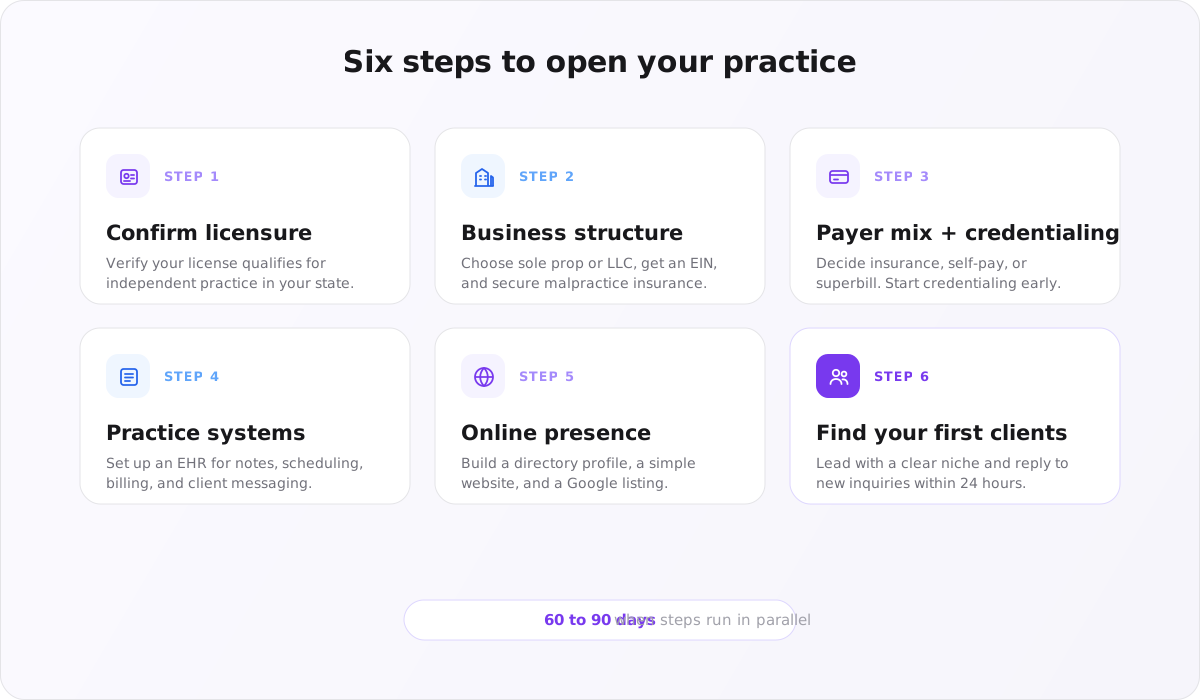
Step 1: Confirm your licensure status and state requirements
Before anything else, confirm that your license is current, in good standing, and appropriate for independent practice in your state.
Most states require a licensed independent status (such as LCSW, LMFT, LPC, or PhD/PsyD depending on your discipline) to practice without clinical supervision. Associate-level licenses (LMSW, AMFT, LPC-Associate) typically require a supervisor and may not qualify for certain insurance panels. Check your state licensing board directly for the specific requirements in your jurisdiction.
Step 2: Choose a business structure
Most solo private practice therapists operate as a sole proprietorship or a single-member LLC. The right choice depends on your state, your risk tolerance, and your tax situation.
Sole proprietorship is the simplest structure. There's no formal registration required beyond any local business license. Income is reported on your personal tax return. The limitation is that it provides no liability separation between your personal and business assets.
LLC (Limited Liability Company) offers a layer of protection between your personal assets and business liabilities. Formation requirements and costs vary by state. Many private practice attorneys recommend an LLC for solo practitioners, though it doesn't replace professional liability insurance.
Regardless of structure, you will need a separate business bank account, an EIN (Employer Identification Number, free from the IRS), and professional liability (malpractice) insurance before seeing your first client.
Step 3: Decide on your payer mix and begin credentialing
Your payer mix determines whether you accept insurance, operate as a self-pay practice, or do a combination of both. This decision shapes your caseload size, revenue per session, and administrative complexity.
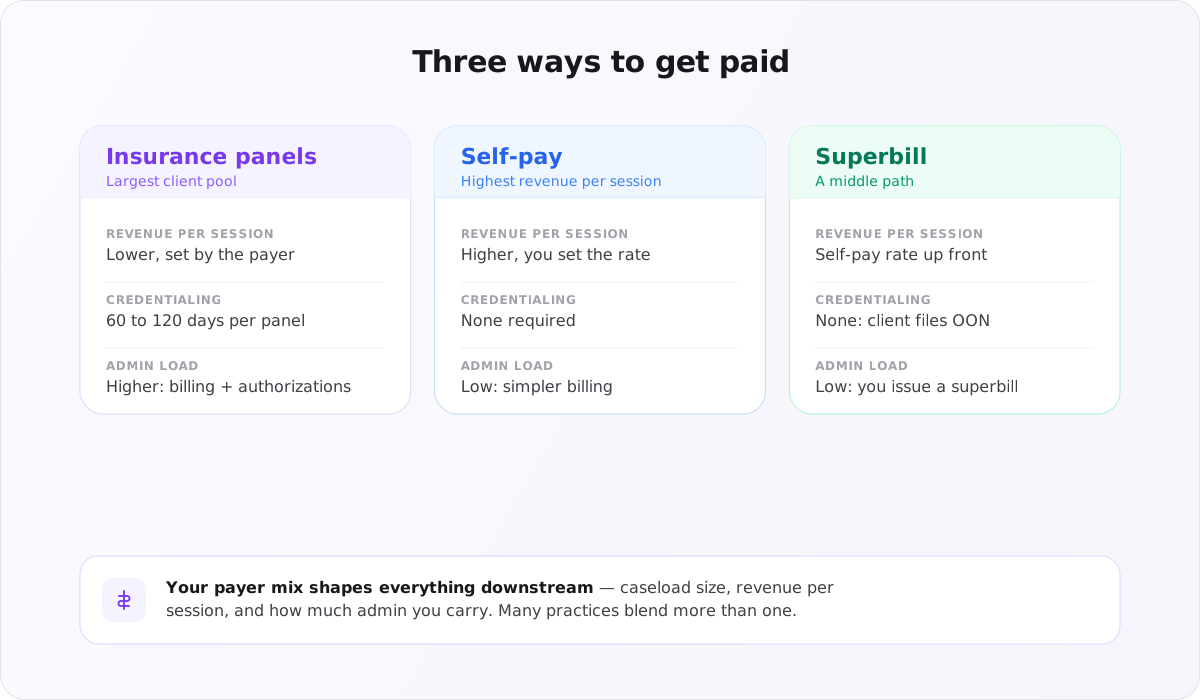
Insurance panels offer a larger potential client pool but require credentialing (a 60 to 120 day process per panel), lower session rates, and more administrative overhead for billing and authorizations. Start the credentialing process before you plan to see your first client. Delays are common and out of your control.
Self-pay (private pay) offers higher per-session revenue, no credentialing, and simpler billing. The tradeoff is a smaller potential client pool and the need to attract clients who can pay out of pocket.
Superbill model is a middle path: you practice as self-pay but provide clients with a superbill they can submit to their insurer for out-of-network reimbursement. This reduces your administrative burden while still making your services accessible to clients with OON benefits.
If you plan to accept Medicare or Medicaid, note that these panels have their own enrollment processes and requirements separate from commercial insurance credentialing.
Step 4: Set up your practice management systems
Your EHR (electronic health records system) and practice management platform are the operational core of your practice. Getting this right before your first client saves you from retrofitting systems into a running practice, which is far more disruptive.
A complete practice management setup for a solo therapist needs to handle: clinical documentation (session notes, treatment plans, intake forms), scheduling and appointment reminders, billing and claims submission, and client communication through a HIPAA-compliant channel.
Documentation is where most solo practitioners feel the pinch first. In conversations with 25 therapists in 2026, 22 cited documentation burden as their single biggest administrative challenge. The average therapist spends 16 minutes per session note before AI tools. On a 25-session caseload, that is more than 6 hours per week.
Upheal's AI clinical notes generate a structured draft from the session recording, which you review and sign. Most Upheal users reduce note time to under 5 minutes per session. Upheal also handles scheduling and reminders, treatment plan documentation, and a HIPAA-compliant client portal, so the full operational stack is in one place from day one.
See how Upheal is built for individual providers
Step 5: Build your online presence before you launch
Your online presence is the primary way new clients will find you. Set these up before you see your first client, not after.
Psychology Today profile. Psychology Today is the highest-traffic therapy directory for most US markets. A complete profile with a professional headshot, a well-written bio that leads with who you help (not your credentials), and accurate availability is the single most important marketing investment for a new practice. Budget the subscription cost as a non-negotiable startup expense.
Website. A basic website that answers three questions clearly is enough to start: Do you work with people like me? How do you work? How do I reach you? You don't need to build this yourself. Squarespace and similar platforms offer therapist-specific templates that can be live in a day.
Google Business Profile. If you see clients in person or in a hybrid model, set up your Google Business Profile before you open. It's free and determines whether you appear in local "therapist near me" searches.
Step 6: Find your first clients
Filling a caseload from zero is the part that feels most uncertain. It is also the part where a clear niche makes the most difference.
Before you start any outreach, define who you most want to work with and make sure your directory profile and website bio reflect that clearly. A profile written for adults managing work-related anxiety and burnout will attract more of the right inquiries than a profile listing fifteen conditions.
For a deeper breakdown of client acquisition strategies, see Upheal's guide to how to get more therapy clients.
The highest-leverage early moves are: complete and compelling directory profiles, outreach to a small number of specific referral partners who share your client population, and a fast intake response. Therapists who respond to new inquiries within 24 hours convert at significantly higher rates than those who take 48 hours or longer.
Common mistakes when starting a private practice
Delaying credentialing. Insurance panel credentialing takes 60 to 120 days per panel and can't be rushed. Starting too late means weeks or months of lost revenue. Begin the process as soon as you have your NPI number.
Underpricing. Setting session fees too low is hard to correct once clients are on your caseload. Research rates in your market before you set your fee. Factor in self-employment taxes, health insurance, and the unpaid administrative time that comes with solo practice.
Choosing the wrong EHR. Switching EHRs once you have an active caseload is disruptive. Evaluate documentation quality, billing capabilities, and scheduling features before you start. A platform that handles notes in 5 minutes instead of 16 has a compounding effect on your available time across a full caseload.
No-showing on the business side. Many therapists are excellent clinicians and struggle with the business infrastructure. Treat business setup (accounting, tax planning, liability coverage) as seriously as your clinical setup. A CPA familiar with self-employed healthcare providers is worth the consultation fee.
Trying to serve everyone. A wide-open niche means competing with every therapist in your market. A specific focus (perinatal mental health, OCD and anxiety, grief and loss) attracts better-fit clients and simplifies your marketing.
FAQs
How long does it take to start a private practice?
Most therapists can complete the setup process in 60 to 90 days if they start all the steps in parallel. The critical path item is insurance credentialing, which takes 60 to 120 days per panel. If you plan to accept insurance, start credentialing as soon as you have your NPI and business address.
How much does it cost to start a therapy private practice?
Startup costs for a solo private practice typically run $2,000 to $5,000, covering LLC formation ($50 to $500 depending on state), professional liability insurance ($500 to $1,500 per year), directory subscriptions (Psychology Today is approximately $30 per month), and EHR and practice management software. Office space is the largest variable cost if you see clients in person.
Do I need an LLC to start a private practice?
You don't legally need an LLC to practice, but many private practice attorneys recommend it. An LLC separates your personal assets from business liabilities and can offer some tax flexibility. It does not replace professional liability insurance. A sole proprietorship is simpler to set up but provides no asset protection.
Can I start a private practice right after getting licensed?
Yes, if you hold an independent license in your state. If you hold an associate-level license that requires supervision, you will need a supervising clinician before seeing clients independently, and some insurance panels won't credential associate-level providers. Check your state licensing board's requirements for your specific credential.
How do I find my first therapy clients?
The highest-leverage moves for a new practice are a complete Psychology Today profile written for your ideal client, outreach to specific referral partners (primary care physicians, employee assistance programs, school counselors), and a fast intake response to new inquiries. A focused niche converts better than broad positioning.
Build on a foundation that supports your practice
The therapists who build sustainable private practices are not necessarily the ones with the most credentials. They are the ones who set up their operational systems well, maintain a clear clinical focus, and keep administrative overhead from eating into their capacity.
Upheal handles the documentation, scheduling, and practice management layer so the clinical work stays central. Notes drafted automatically. Scheduling handled. Treatment plans organized.