Progress note template: what to include and how to write one
TL;DR
- A progress note template for therapists structures what to document after each client session: presenting concerns, observations, interventions, client response, and plan.
- Every progress note should cover seven core fields, from session details to clinical assessment and next steps.
- Using a consistent template reduces documentation time, supports insurance compliance, and protects you in an audit.
- AI tools like Upheal generate a structured draft from the session recording, which you review and sign.
A progress note template for therapists is the clinical framework you use to document each client session. It structures the information you capture: what the client brought to the session, what you worked on together, how they responded, and what comes next in their care.
Every licensed therapist is expected to maintain progress notes. They're part of the official health record, required for insurance reimbursement, and the documentation that demonstrates the quality and continuity of care you're providing. When notes are vague, missing fields, or inconsistent across sessions, they create risk for your practice.
This guide covers what to include in a progress note, walks through how to write one step by step, and gives you a completed example to reference. For more on writing notes, see Upheal's 8 tips for better therapy progress notes.
What is a progress note in therapy?
A progress note (sometimes called a session note or psychotherapy note) is the clinical record documenting the substance of a therapy session. It captures the client's presenting concerns that day, what you worked on together, and how the client responded. Progress notes are part of the legal health record and can be requested during insurance audits, licensing board reviews, or legal proceedings.
Progress notes are not the same as psychotherapy process notes. Psychotherapy process notes are private clinical reflections you keep for your own reference. Progress notes are official documentation. The distinction matters for HIPAA compliance: the two types of notes carry different release and retention rules.
What a progress note template for therapists should include
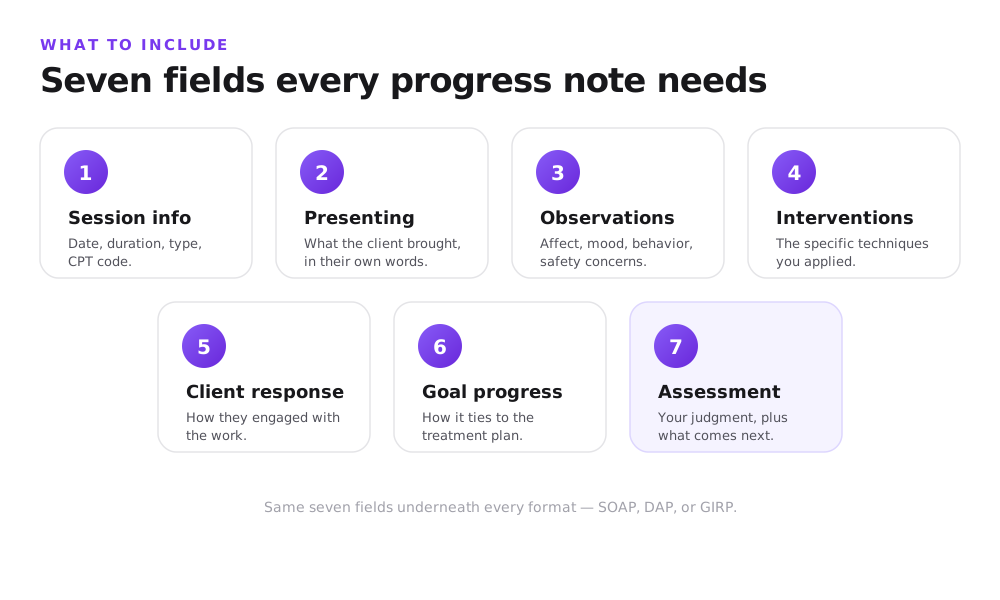
Most progress note formats cover the same core areas, even if the structure varies. SOAP, DAP, and GIRP each organize this information differently, but the underlying content is consistent. A complete therapy progress note should include these seven fields.
Session information
Client name, date of service, session duration, session type (individual, couples, family), modality (in-person or telehealth), and CPT code. These are factual and easy to complete first.
Presenting concerns
What the client brought to the session, in their own words where possible. Not your interpretation yet. Example: "Client reports increased irritability and difficulty sleeping since returning to work after medical leave."
Mental status or behavioral observations
How the client appeared during the session. Brief clinical observations: affect, mood, behavior, speech, thought process, and any safety concerns. This is not a full mental status exam for a standard session note.
Interventions used
The specific techniques or modalities you applied. Cognitive restructuring, grounding exercises, EMDR, motivational interviewing, psychoeducation. Be specific enough that another clinician reading this note could understand what occurred.
Client response
How the client engaged with the interventions. "Client completed the thought record during session and identified a more balanced alternative thought" is more clinically useful than "client engaged well."
Progress toward treatment goals
A brief note on how the session connected to the client's treatment goals. Reference the specific goal from the treatment plan if you're working from one.
Assessment and plan
Your clinical judgment of where the client is, including symptom severity and risk considerations. Followed by what comes next: homework, referrals, topics for the next session, any changes to the treatment plan, and the next appointment date.
How to write a progress note: step by step
- Document immediately after the session. Your recall of specific details drops quickly. Block 10 to 15 minutes after each appointment.
- Start with session information. Date, length, CPT code, and modality. These anchor the note and require no recall.
- Capture presenting concerns in the client's language. What did the client say they wanted to work on today? Quote directly where it adds clarity.
- Record your clinical observations. Affect, mood, and behavior. Flag anything that deviates from the client's baseline or raises a safety concern.
- List interventions specifically. Don't write "provided therapy." Name the technique and how you applied it in this session.
- Describe the client's response. How did they engage? What shifted? What stayed the same?
- Connect the session to the treatment plan. Which goal does this session address? Is the client making progress, maintaining, or showing regression?
- Write your clinical assessment. Your professional judgment in one to three sentences. Include risk considerations even if the answer is "no current safety concerns."
- State the plan. Next appointment, any between-session tasks, referrals, or changes to the clinical approach.
- Review and sign. Read back for vague language or missing fields. Sign and timestamp.
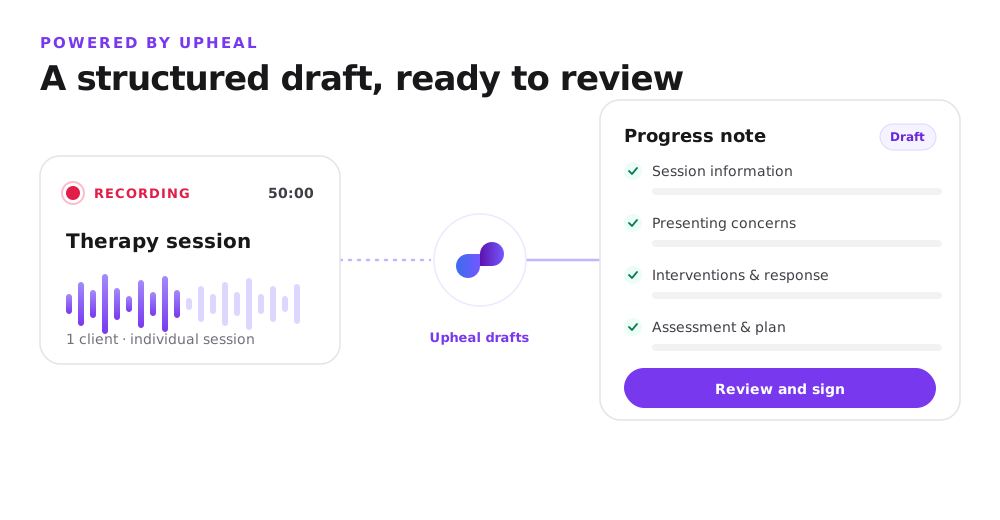
If you use Upheal's AI clinical notes, the platform generates a structured draft from the session recording. You review, edit, and finalize it. Most therapists using Upheal reduce documentation time from around 16 minutes per session to under five, without changing how they run sessions.
Start free, no credit card required
Example progress note (illustrative only)
This is an example only. It does not represent a real client record and should not be used as clinical documentation without therapist review and customization for the individual client.
Client: J.M. | Date: 06/23/2026 | Duration: 50 min | Type: Individual, telehealth | CPT: 90837
S (Subjective): Client reports elevated anxiety over the past week, citing a work performance review as the primary stressor. States: "I kept catastrophizing the whole weekend before it happened." Reports improved use of the "scheduled worry time" strategy introduced at the prior session.
O (Objective): Alert and engaged throughout session. Affect mildly anxious but appropriate to content. Speech organized and goal-directed. Completed thought record during session with minimal prompting. Visible shift in affect noted after reframing automatic thought. No safety concerns.
A (Assessment): Client continues to make measurable progress toward anxiety reduction goals. GAD-7: 11 (moderate severity), down from 14 at intake. Increasing awareness of cognitive patterns and initiating reframing without prompting. Diagnosis consistent with GAD (F41.1). No current safety concerns.
P (Plan): Client to complete thought record independently two to three times before next session. Review at next appointment scheduled 07/07/2026.
Common mistakes therapists make with progress notes
Being too vague. "Client discussed their week" does not document care. Specificity protects you and demonstrates clinical value to insurers and licensing boards.
Cloning prior notes. Copy-pasting a previous session's note without updating it is a compliance risk. Each note should reflect what actually happened in that specific session.
Confusing progress notes with psychotherapy notes. These are legally distinct. Progress notes are part of the official health record and subject to release. Psychotherapy process notes are private. Mixing them up creates legal exposure.
Skipping the assessment. The assessment is your clinical judgment. Leaving it blank or writing only "stable" makes the note look incomplete and makes it harder to demonstrate clinical decision-making.
Writing days after the session. Notes written long after a session are harder to defend in an audit and are less accurate.
Writing for the insurer, not the client. Document what actually happened in the session. Insurance compliance follows from honest, complete documentation. Notes written backward from the CPT code tend to be generic and less clinically useful.
What note format should I use?
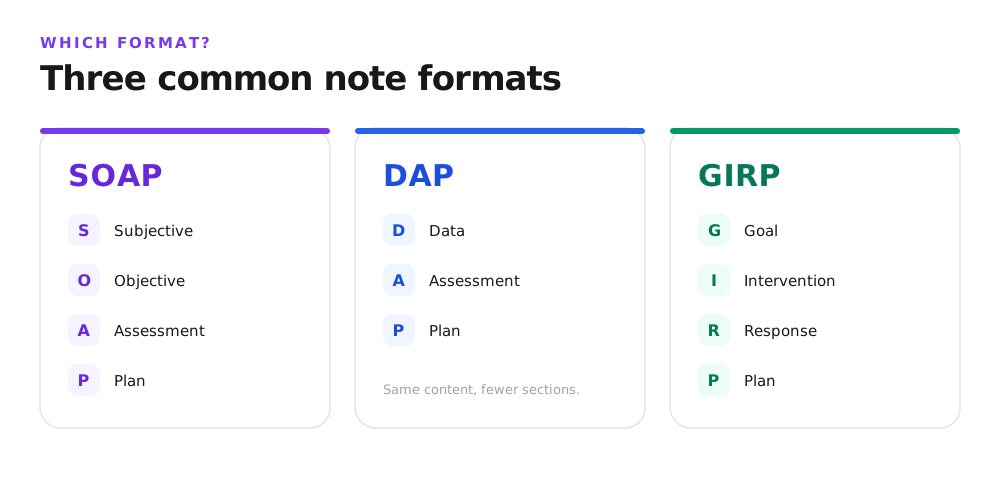
There is no single mandated format for therapy progress notes. The most widely used formats are SOAP (Subjective, Objective, Assessment, Plan), DAP (Data, Assessment, Plan), and GIRP (Goal, Intervention, Response, Plan). Each organizes the same core content differently. Your state licensing board, employer, or insurer may specify a preferred format, so check those requirements first.
Format matters less than completeness and consistency. Pick one and apply it uniformly across your caseload. Upheal's documentation hub supports multiple note formats so you can work in the structure that fits your practice.
Frequently asked questions
How long should a therapy progress note be?
A progress note should be long enough to document the session accurately, and no longer. Most outpatient therapy progress notes run 150 to 300 words. A concise, specific note is more defensible and easier to write consistently than a long one padded with generic language.
Do I need to write a progress note for every session?
Yes. Progress notes are required for every billed session and are part of the clinical record. They are not optional. Some clinicians write brief notes for coordination of care calls or case consultations, but standard therapy sessions require a note for each occurrence.
Are progress notes the same as psychotherapy notes?
No. Psychotherapy notes are private clinical reflections kept separately from the health record. Progress notes are part of the official health record and are subject to release. The distinction matters for HIPAA compliance: progress notes and psychotherapy notes carry different release and retention rules.
What is the difference between a SOAP note and a progress note?
SOAP is a format for writing a progress note, not a different type of document. A SOAP note organizes the progress note into four sections: Subjective, Objective, Assessment, and Plan. Both SOAP and DAP notes are progress notes written in different structures. For a breakdown of the SOAP format, see Upheal's guide to AI SOAP notes.
How long do I need to keep therapy progress notes?
Retention requirements vary by state and insurer. Most states require retaining records for at least seven years from the last date of service, or seven years after a minor client turns 18. Check your state licensing board and malpractice insurer for the rules that apply to your practice.
Can I use AI to write progress notes?
Yes, with appropriate oversight. You review and sign every note, and you remain clinically and legally responsible for its contents. AI tools like Upheal generate a structured draft from the session recording, which you then review, edit, and finalize. Documentation burden was the most frequently cited pain point in Upheal's 2026 survey of 25 therapists, with 22 out of 25 naming it as their biggest administrative challenge.
Write notes that work for you and your clients
Progress notes protect your practice, support continuity of care, and demonstrate the clinical value of your work. Done well and done consistently, they become a low-friction part of your workflow rather than the thing you dread at the end of a long day.
If you want to spend less time writing and more time with clients, Upheal generates a structured draft after each session. You stay in control of every word.