How to make more money as a therapist
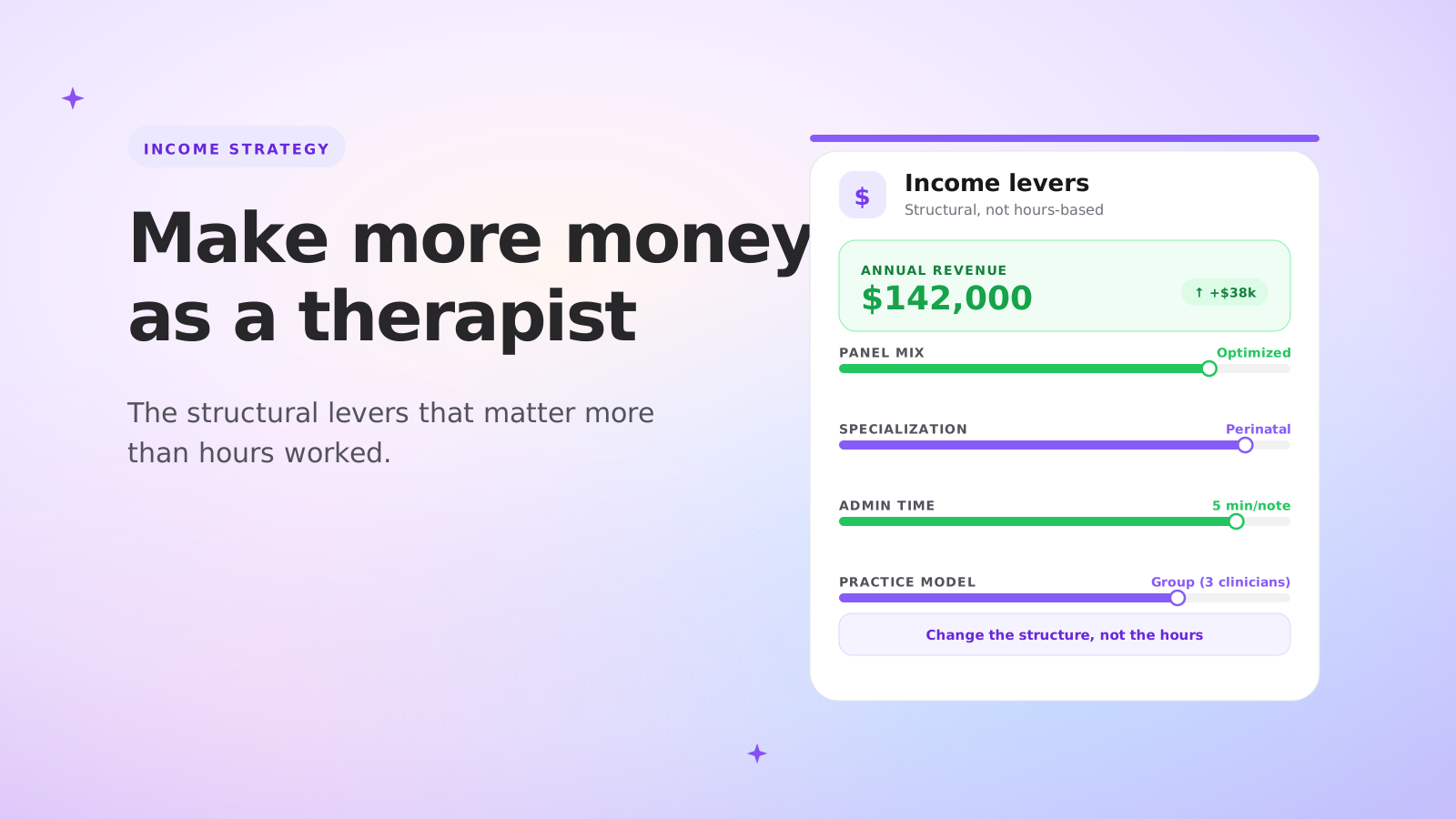
Most advice on how to make more money as a therapist boils down to one idea: see more clients. That's the fastest way to burn out, not the fastest way to build a sustainable income. The therapists who actually increase their income over time usually change something structural, like which insurance panels they're on, how they staff a group practice, or how much of their week disappears into admin instead of billable hours.
TL;DR
- The biggest income levers for therapists are structural: panel status, practice structure (solo vs. group), and specialization, not hours worked.
- Median pay for mental health counselors was $59,190 in May 2024 (BLS), but private-pay and specialized practices routinely exceed that.
- Dropping low-reimbursing insurance panels can raise per-session revenue, but it's a tradeoff against client volume and access, not a guaranteed win.
- Administrative time (notes, billing, scheduling) is one of the most overlooked drains on billable hours.
- Group practice owners increase revenue by adding clinicians, but only if oversight and admin systems scale with the team.
How can therapists make more money without seeing more clients?
Therapists increase income without adding client hours by changing the economics of each session they already have: raising private-pay rates, dropping the lowest-reimbursing insurance panels, adding a specialization that commands higher rates, or reducing the unpaid admin time that surrounds each session. Seeing more clients is the default answer because it's the easiest to picture, but it's also the one most likely to lead to burnout, since therapy work doesn't scale the way other services do. A full caseload with the wrong panel mix or too much admin overhead can pay less than a lighter caseload with better structural decisions.
Which practice structure decisions affect therapist income the most?
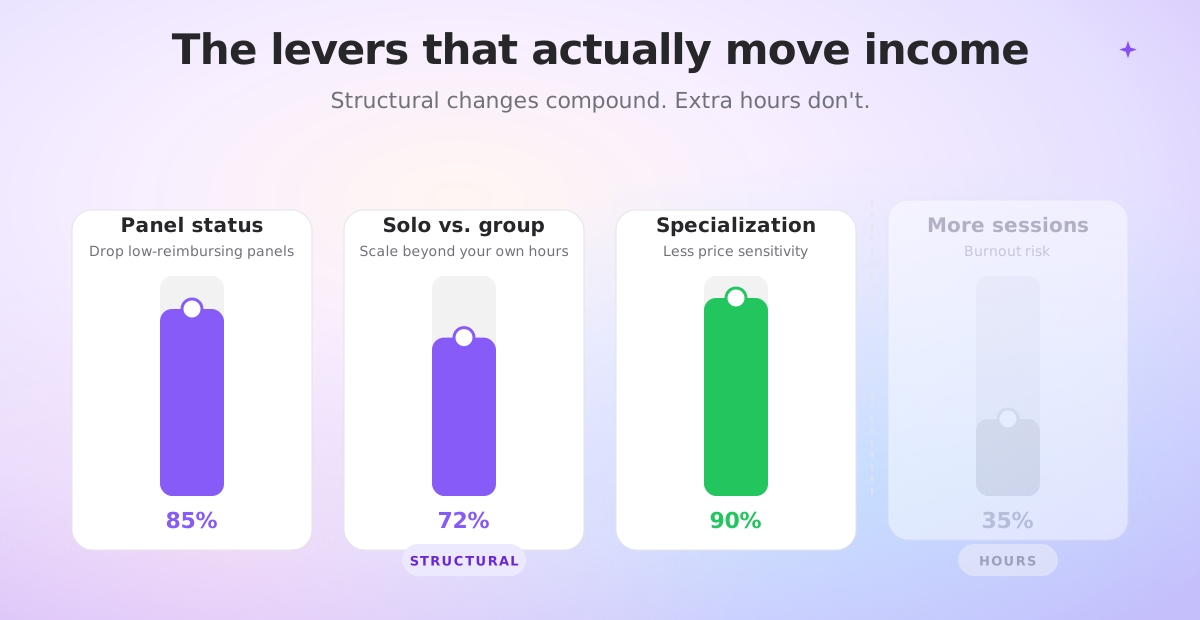
Three structural decisions move the needle more than caseload size: insurance panel status, solo versus group practice, and specialization.
- Panel status. Staying on low-reimbursing panels caps what you can charge per session regardless of demand. Going private-pay or negotiating better in-network rates directly raises per-session revenue, but it narrows who can afford to see you.
- Solo vs. group. Solo practice keeps 100% of session revenue but caps total capacity at your own hours. Group practice trades a cut of each associate's revenue for the ability to grow beyond your own caseload, if the admin and oversight systems can support it.
- Specialization. Niching into a higher-demand, harder-to-find specialty (perinatal mental health, complex trauma, couples work) supports higher rates than generalist practice, because clients seeking specialized care are less price-sensitive.
What administrative costs are quietly eating into therapist income?
Documentation, billing follow-up, and scheduling admin quietly convert billable hours into unpaid work. A therapist who spends an extra hour per day on notes and billing tasks is losing roughly five hours a week that could otherwise go toward client sessions, consultation, or simply not working late.
This is where most income advice misses the point: the fix isn't always charging more, it's reclaiming the hours already being spent on unpaid admin. Upheal's AI clinical notes cut documentation time from an average of 16 minutes per note to 5, which adds up to real reclaimed capacity across a full caseload. For a deeper look at how EHR choice affects a private practice's bottom line, see the best EHR for private practice in 2026.
Should group practice owners take on more clinicians to increase revenue?
Adding clinicians increases group practice revenue only when oversight, scheduling, and admin systems scale alongside the team, otherwise each new hire adds more coordination work than income. A group practice that takes a percentage of each associate's session revenue can meaningfully grow total income, but only if the owner isn't the bottleneck for supervision, scheduling, and compliance review. For a closer look at scaling admin without losing oversight, see Upheal for group practices.
Common mistakes that cap therapist income
- Staying on every panel that ever approached you. Some panels reimburse well below the value of the session; auditing panel-by-panel revenue at least once a year catches this.
- Treating admin time as free. Time spent on notes and billing has a real cost even though it isn't billed directly, and it's often the easiest lever to fix.
- Scaling headcount before systems. Adding clinicians to a group practice without the scheduling, oversight, and documentation systems to support them creates more unpaid management work, not more net income.
- Ignoring specialization. Staying a generalist in a saturated local market caps what the market will pay, compared to a well-marketed specialty.
Frequently asked questions
Can therapists make a lot of money in private practice?
Yes, therapists in private practice can earn well above the median wage, especially with a strong specialization or a private-pay model. The BLS median of $59,190 includes lower-paying institutional and agency roles; private-pay specialists and established group practice owners routinely exceed that figure.
Is it worth dropping insurance panels to increase income?
It can be, but only if your local market supports enough private-pay demand to replace the client volume you'd lose. Dropping a low-reimbursing panel raises per-session revenue immediately, but it also narrows who can afford to see you, so the decision depends on your specialty, location, and how price-sensitive your ideal client is.
How many clients does a therapist need to see to make six figures?
At a typical private-pay rate, many therapists reach six figures somewhere between 20 and 28 sessions a week, though it depends heavily on rate, no-show rate, and how much unpaid admin time surrounds each session. Reducing admin overhead and no-shows can lower that number meaningfully without adding a single extra session.
The bigger picture
The therapists who increase their income sustainably usually aren't the ones who added more sessions. They're the ones who audited their panel mix, fixed a staffing or admin bottleneck, or reclaimed hours that were quietly going to unpaid paperwork. Those changes compound in a way that adding more client hours never quite does.

.avif)