
LPC meaning: what is a licensed professional counselor?
TL;DR
- LPC stands for Licensed Professional Counselor — one of the most common mental health credentials in the US
- LPCs hold a master's degree in counseling, complete 2,000 to 4,000 supervised clinical hours (varies by state), and pass a state licensure exam
- LPCs are licensed to independently assess, diagnose, and treat mental health conditions
- LPC, LPCC, and LCPC refer to the same credential with different names depending on the state
- LPCs can't prescribe medication; that requires a separate medical or prescribing credential
- LPC vs LCSW: the main difference is educational training, not clinical scope
LPC stands for Licensed Professional Counselor. It is one of the most common mental health credentials in the United States, held by therapists who provide individual, couples, family, and group therapy for a wide range of mental health concerns.
If you have been searching for a therapist and seen "LPC" after someone's name, or if you're considering a career in counseling and want to understand what the credential means, this guide covers everything you need to know: what LPCs do, how to become one, how the LPC compares to other credentials, and what to look for when finding one.
What does LPC stand for?
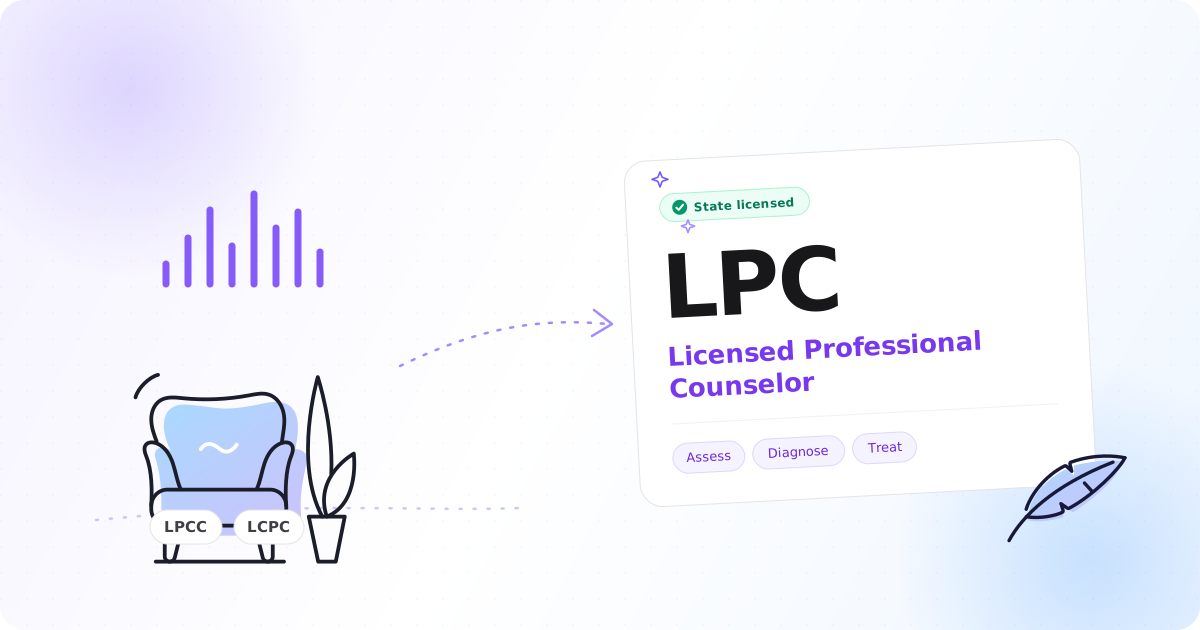
LPC stands for Licensed Professional Counselor. In some states, the same credential is called LPCC (Licensed Professional Clinical Counselor) or LCPC (Licensed Clinical Professional Counselor). The credential requirements and scope of practice are similar across these titles, but the specific name depends on state licensing law.
An LPC is a therapist who has completed a master's degree in counseling or a related field, accumulated the required supervised clinical hours, and passed a state licensure exam. Once licensed, LPCs can practice independently and provide mental health therapy without supervision.
What is a licensed professional counselor?
A licensed professional counselor is a master's-level mental health professional trained to assess, diagnose, and treat a wide range of mental health conditions. LPCs provide psychotherapy to individuals, couples, families, and groups in private practice, community mental health centers, hospitals, schools, and other clinical settings.
LPCs are trained in evidence-based therapeutic approaches including cognitive behavioral therapy (CBT), dialectical behavior therapy (DBT), trauma-focused therapy, motivational interviewing, and others. Many LPCs specialize in a specific population or modality through post-licensure training after earning their initial credential.
The LPC credential is granted at the state level. Requirements vary by state, but the core path is consistent: graduate-level education, supervised clinical experience, and a licensure exam.
How to become an LPC
The path to LPC licensure follows a consistent structure across most states, though the specific numbers vary.
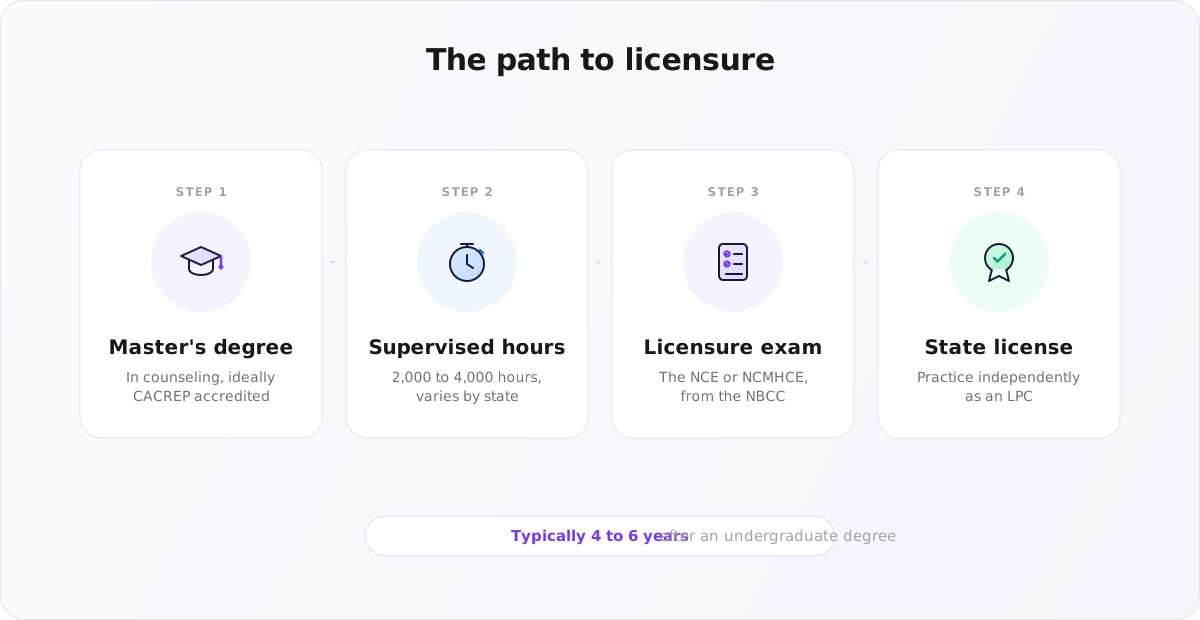
Step 1: Complete a qualifying master's degree.
Most states require a master's degree in counseling, mental health counseling, or a closely related field. Programs accredited by CACREP (the Council for Accreditation of Counseling and Related Educational Programs) are the gold standard and are required or preferred in many states. A counseling master's typically takes two to three years.
Step 2: Accumulate supervised clinical hours.
After graduation, LPC candidates complete supervised direct client contact hours under a licensed supervisor. Requirements range from 2,000 to 4,000 hours depending on the state, with a specified portion required to be direct clinical contact.
Step 3: Pass the licensure exam.
Most states require the National Counselor Examination (NCE) or the National Clinical Mental Health Counseling Examination (NCMHCE), both administered by the National Board for Certified Counselors (NBCC).
Step 4: Apply for state licensure.
Submit your transcript, supervision verification, exam scores, and application fee to your state licensing board. Requirements differ by state — check your specific state's board for current standards.
Continuing education is required to maintain the license in most states, typically 20 to 40 hours per renewal cycle.
What does an LPC do?
LPCs provide therapy for a wide range of mental health concerns. Common areas of practice include:
Anxiety and depression. CBT, acceptance-based approaches, and behavioral activation are among the most commonly used evidence-based treatments for mood and anxiety disorders.
Trauma and PTSD. Many LPCs specialize in trauma-focused CBT, EMDR (Eye Movement Desensitization and Reprocessing), somatic approaches, and other trauma-informed modalities.
Relationship and family issues. Couples counseling, family therapy, and communication skills work.
Life transitions. Grief, career change, divorce, identity development, and adjustment concerns.
Substance use and co-occurring disorders. Common in community mental health and outpatient treatment settings.
Children and adolescents. Behavioral, emotional, and developmental concerns, typically in collaboration with families.
LPCs are generalists by initial training. Specialization typically develops through post-licensure training, supervision, and clinical experience in a specific area.
LPC vs LCSW: what's the difference?
LPC (Licensed Professional Counselor) and LCSW (Licensed Clinical Social Worker) are both licensed mental health professionals who provide therapy. For most clients seeking therapy, either credential is appropriate. The differences are in educational background and typical practice settings, not clinical scope.
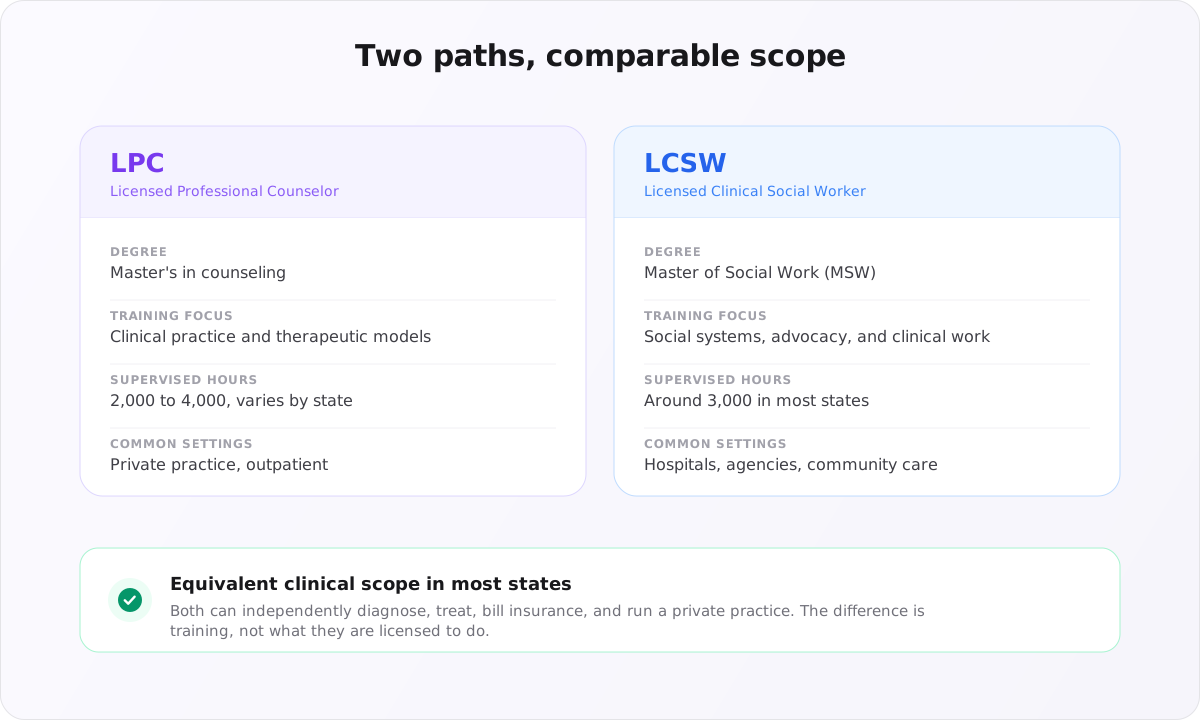
Educational background. An LPC holds a master's degree in counseling. An LCSW holds a Master of Social Work (MSW). MSW programs typically include a broader emphasis on social systems, community practice, and advocacy alongside clinical training. Counseling master's programs are more specifically focused on clinical practice and therapeutic models.
Supervised hours. Requirements vary by state for both credentials. LCSWs typically complete 3,000 supervised hours in most states; LPCs typically complete 2,000 to 4,000.
Scope of practice. In most states, LPCs and LCSWs have equivalent clinical scope: both can independently diagnose and treat mental health conditions, bill insurance, and maintain a private practice. The credential itself is less determinative than the individual therapist's specialty and approach.
Settings. Social workers are commonly found in hospital systems, child welfare agencies, and community mental health organizations. LPCs are common in private practice and outpatient settings, though there is significant overlap.
LPC vs LMFT and other counseling credentials
LMFT (Licensed Marriage and Family Therapist) is a credential for therapists who specialize in relational and systemic work with couples and families. LMFTs can also provide individual therapy. They hold a master's degree in marriage and family therapy, with supervised hours specifically focused on relational dynamics.
LPCC is the California title for the same credential as LPC. California adds a requirement of 500 additional hours in diagnosis and treatment of mental disorders beyond the standard master's training.
LCPC (Licensed Clinical Professional Counselor) is the title used in states including Illinois and Maryland. It carries the same meaning as LPC.
LPC-Associate or LPC-Intern are provisional titles used in some states for counselors who have completed their degree but are still accumulating supervised hours toward full licensure.
Can an LPC prescribe medication?
No. LPCs can't prescribe medication. Prescribing authority in mental health requires a separate medical credential: psychiatrists (MDs or DOs), psychiatric nurse practitioners (PMHNPs), or in some states, psychologists with prescriptive authority.
LPCs frequently work alongside prescribers in collaborative care arrangements. A common setup in private practice is a client who sees an LPC for therapy and a psychiatrist or PMHNP for medication management.
LPC clinical documentation
LPCs are required to maintain complete clinical documentation for every client: a progress note for each session, treatment plans, intake assessments, and any other clinical records required by their state licensing board or insurer.
Documentation is one of the most time-intensive parts of clinical work. For LPCs in private practice, it often competes directly with billable session time and end-of-day energy.
Upheal's AI clinical notes generate a structured progress note draft from session recordings. LPCs review, edit, and sign. LPCs using Upheal reduce documentation time from 16 minutes to under five minutes per session on average. Upheal is built for independent providers: see how it fits solo and group practice at upheal.io/who-we-serve/individual-providers.
How to find a licensed professional counselor
If you're looking for an LPC therapist, these resources are a practical starting point:
Psychology Today's therapist directory (psychologytoday.com/us/therapists) is the largest US directory for finding therapists, searchable by location, insurance, specialty, and credential.
TherapyDen has strong representation of therapists who identify as affirming or LGBTQ+-inclusive.
Zencare features vetted therapist profiles with video introductions.
Your insurance carrier's provider directory is the right starting point if you plan to use insurance: filter for in-network LPCs in your area.
When reviewing a profile, look for an LPC whose specialty matches your presenting concern, whose bio is written in language that resonates with your situation, and who offers a free initial consultation before you commit.
Frequently asked questions
What does LPC mean in mental health?
LPC means Licensed Professional Counselor. It's a credential held by licensed therapists who have completed a master's degree in counseling, accumulated supervised clinical hours, and passed a state licensure exam. In a mental health context, LPC indicates a therapist who is independently licensed to assess, diagnose, and treat mental health conditions.
Is an LPC the same as a therapist?
LPC is a specific credential, while "therapist" is a general term. All LPCs are therapists, but not all therapists are LPCs. Other licensed therapists include LCSWs (Licensed Clinical Social Workers), LMFTs (Licensed Marriage and Family Therapists), and licensed psychologists. The word "therapist" alone does not indicate a specific license or training level.
How long does it take to become an LPC?
Becoming an LPC typically takes four to six years after completing an undergraduate degree: two to three years for a master's degree in counseling, followed by one to three years of supervised clinical hours. The exact timeline depends on state requirements and individual pace.
Can an LPC diagnose mental health conditions?
Yes. LPCs are licensed to assess and diagnose mental health conditions using the DSM-5-TR. Independent diagnostic authority is part of the LPC scope of practice in most states, distinguishing LPCs from some other mental health support roles.
What is the difference between LPC and LPCC?
LPC and LPCC refer to the same credential with different names depending on state law. California uses LPCC with slightly different supervised hour requirements. Other states use LPC, LCPC, or other variations. If you are checking a specific therapist's credential, verify against the licensing board in their state.

.avif)